
Reviewed · RWANDAN COFFEE AND TEA TOURS
Rwandan Coffee Experience
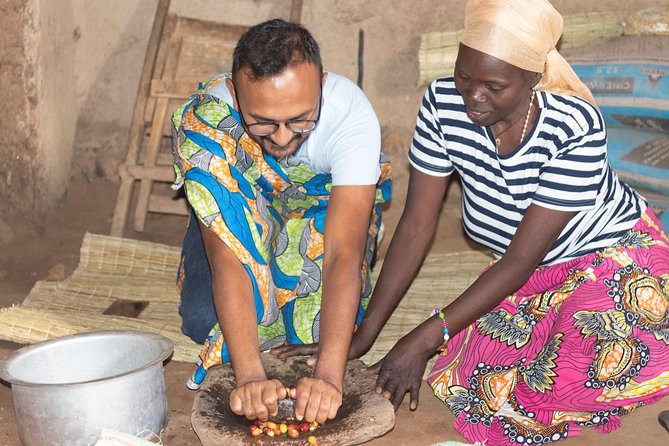
Coffee starts in the soil, not the cup. This hands-on day outside Kigali lets you follow Rwandan coffee from bright red cherry to freshly brewed drink, while spending time with a local family and community cooperative. I especially like the genuine home visit and the chance to do the work yourself, from picking cherries to roasting and grinding them.
I also like that lunch, water, coffee, tea, a local guide, and return transport from Muhanga are included. The main point to consider is transportation from Kigali: it is not included in the $90 price, though it can be arranged for an extra charge. You should also expect uneven ground and a fairly long day.
In This Review
- Key points to know before you book
- From Kigali toward Muhanga and the village
- Getting dressed for work in the fields
- Picking coffee cherries one by one
- Washing, pulping, and drying the cherries
- Lunch with a Rwandan family
- Roasting and grinding coffee by hand
- Meeting the Azizi Life community
- How much value do you get for $90?
- Who should book this experience?
- Practical details for a smoother day
- Should you book the Rwandan Coffee Experience?
- FAQ
- Where does the Rwandan Coffee Experience begin?
- Does the tour include transportation from Kigali?
- Is transport from Muhanga to the village included?
- How long does the experience last?
- What is included in the $90 price?
- Do I need to be physically fit?
- Can children join the experience?
- Can I cancel for a full refund?
Key points to know before you book
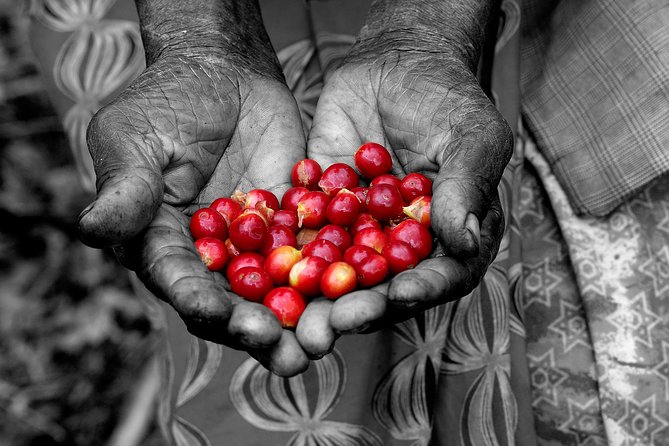
- You handle the coffee yourself: Pick ripe cherries, wash and pulp them, dry them, roast the beans, and grind them by hand.
- The village visit feels personal: You spend time with a Rwandan family and can ask about daily life over lunch.
- You have a choice of chores: Fetch water or help prepare food in the kitchen.
- Bona may lead your day: A praised guide named Bona has helped make the experience warm and well organized.
- The price includes more than coffee: Lunch, drinks, local guidance, gratuities, and village transport from Muhanga are covered.
- Plan for a full half-day or more: The experience lasts about five to eight hours and requires moderate physical fitness.
From Kigali toward Muhanga and the village
The day begins with a briefing before the drive toward the village. The official meeting point is on NR1 in Gitarama, also called Muhanga, rather than directly in central Kigali. That detail matters when you plan your day. Transportation from Kigali is not part of the listed price, but it can be arranged for an additional fee.
If you are already in Muhanga, the included return transport from town to the village makes the arrangement much simpler. If you are staying in Kigali, ask about pickup when you book and confirm the extra cost before setting out. One person who arranged the experience was picked up from an apartment, but you should not assume that service is automatically included for every booking.
The drive is part of the transition from city life to rural Rwanda. You begin with a short orientation, then head out to the community where the coffee work takes place. The timing can run from five to eight hours, so keep your schedule open. The stated operating window is 8:00 a.m. to 11:00 a.m. daily, which appears to refer to available start times rather than the end of the activity. Confirm the exact start time when booking.
More coffee and tea tours:
- Kigali: Traditional Coffee Experience ( Bean to Brew)
★ 4.8 · 54 reviews - Specialty Coffee Masterclass
★ 5.0 · 33 reviews - Women-led Coffee Farm Trek
★ 5.0 · 19 reviews
Getting dressed for work in the fields
When you arrive, you are welcomed and given suitable clothing for the day. This is not a polished coffee tasting in a hotel lounge. You are preparing to walk outside, work with plants, carry water, and take part in practical household tasks.
That change of clothing also helps set the tone. You are not simply watching a demonstration from the side. You are expected to take part, and the work may be physical. Wear comfortable shoes and clothing that can handle uneven surfaces. The activity asks for moderate fitness, and that is a fair warning rather than a formality.
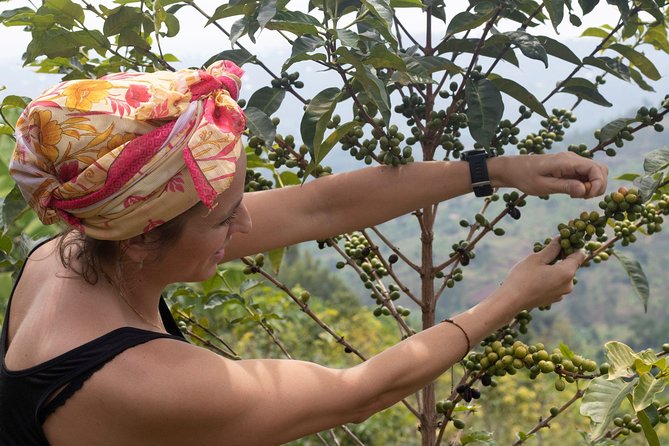
The first lesson covers the coffee plants and the right cherries to select. Ripe coffee cherries are picked by hand, so you get a better sense of the care needed before a bean ever reaches a roaster. This is one of the strongest parts of the experience because it turns an everyday drink into a chain of careful decisions.
Picking coffee cherries one by one
In the coffee fields, your guide explains how to identify suitable cherries and how to harvest them. The work is simple to understand but slower than most people expect. You are dealing with individual fruit, not scooping coffee beans from a bin.
I like this stage because it gives you a clear connection between farm work and the finished cup. You can see why coffee production takes time and why the quality of the fruit matters. The experience is not built around a long lecture. You learn through the task itself.
The setting also gives you a chance to notice rural life without reducing it to a quick photo stop. The day is organized around working with local people, not rushing between a string of attractions. That is why the activity received such strong praise for feeling authentic rather than transactional.
Still, you should understand the tradeoff. Hands-on work can be slower and less predictable than a standard guided tour. If you want a fast tasting with several coffee varieties, this is not the right format. If you want to know how coffee is produced at the human level, the pace works in your favor.
Washing, pulping, and drying the cherries
After harvesting, you help fetch water or choose kitchen work instead. Fetching water gives you a practical sense of one of the ordinary tasks connected with food preparation and coffee processing. If you prefer to stay near the home, helping prepare food offers a different way to take part.
Once the water is collected, you wash and pulp the coffee cherries. The pulp is removed so the coffee can be laid out to dry. You are not just shown the stages in the process. You take part in them, then leave the coffee to dry before returning to it later.
This part of the day is useful because it slows down the usual coffee routine. At home, most of us think about grinding and brewing, not washing fruit or waiting for it to dry. Here, the waiting becomes part of the lesson.
You may want to ask your guide how long the drying stage normally takes and how the family manages the coffee between harvest and roasting. The supplied details do not give a fixed drying period, so do not expect the same beans you handle early in the day to be ready for roasting immediately. The later roasting activity uses dried coffee, and the experience connects the steps in a simple, hands-on way.
A completely different kind of day:
- Kigali City Tour
★ 5.0 · 452 reviews - Kigali: Walking Tour with a Local Guide
★ 4.9 · 234 reviews - One-day Akagera National Park Game Drive with a Choice 4×4
★ 5.0 · 105 reviews - Private Full-day Kigali City Tour with Pickup and Lunch
★ 5.0 · 79 reviews
Lunch with a Rwandan family
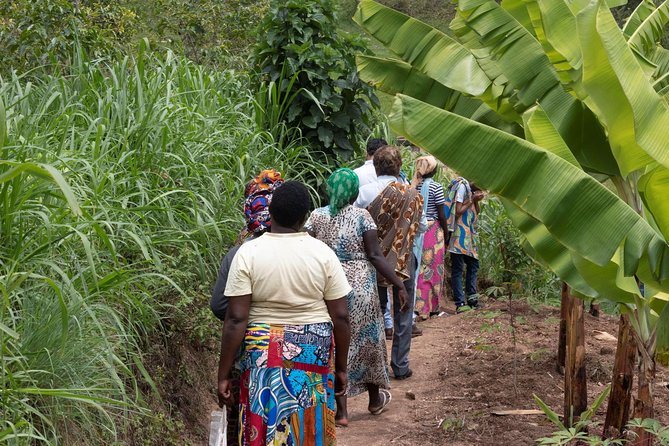
Lunch is local Rwandan food that the family would normally eat. This is more meaningful than a meal designed only for visitors because it gives you a natural reason to sit down and talk.
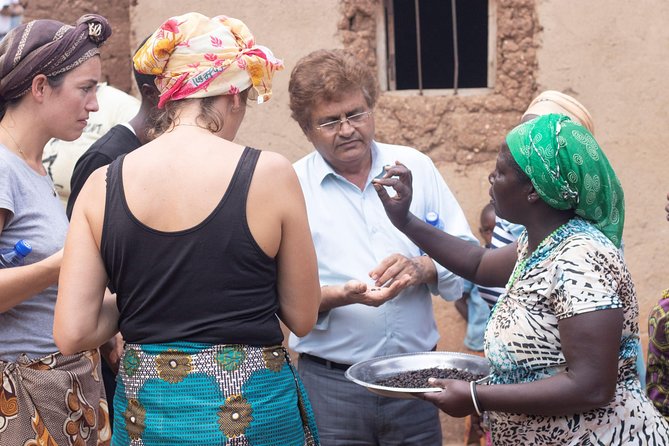
Use this pause well. Ask about daily routines, the community, coffee work, and family life. The hosts are presented as people sharing part of their normal world, not actors performing a staged village scene. That personal exchange was one of the most praised elements of the day.
The meal is included in the $90 price, along with bottled water and coffee or tea. Food preferences and restrictions are not specified, so tell the operator about any needs before the tour. You should also avoid expecting a restaurant menu or a long list of choices. The point is to eat what the family typically prepares.
For me, this is where the experience moves beyond a farm activity. Coffee gives the day its structure, but conversation over lunch gives it human weight. You are able to ask questions that would not fit naturally into a short city tour.
Roasting and grinding coffee by hand
After lunch, you roast and grind dried coffee by hand. This is the part many people will remember most clearly, because it brings the process to a finish you can taste.
Hand roasting requires attention. The beans change as they heat, and the work connects sight, smell, sound, and timing. Then grinding by hand gives you one more practical step before the coffee is ready. The pace is slower than pressing a button, but that is the point.
The final drink is not an abstract product. You have seen the plant, chosen the fruit, washed it, pulped it, dried it, roasted it, and ground it. Even if you are already a serious coffee drinker, the activity offers a useful reminder that the finished cup depends on many small stages.
Coffee and tea are included, so you can enjoy a drink at the end of the work. The description does not promise a formal tasting lesson or multiple brewing methods, so book this for the production experience rather than for technical coffee education.
Meeting the Azizi Life community
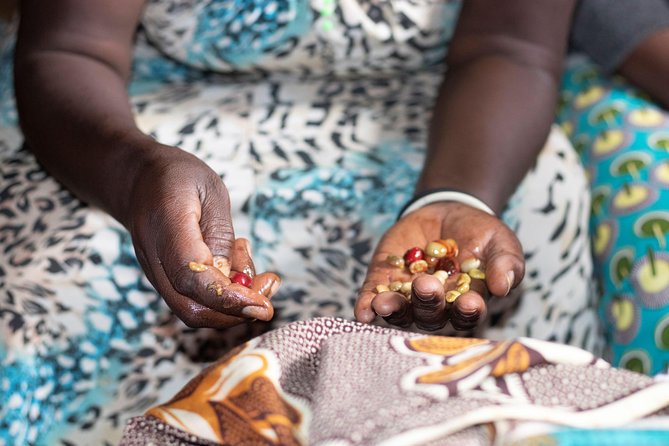
Azizi Life organizes the experience, and the day also connects you with local artisans. Before heading to the village, you may have time to enjoy coffee and a pastry and browse items made by local artisans. The gift shop is optional, and purchases are not included in the tour price.
That stop can add context to the visit, especially if you want to support local makers. It also gives you a chance to buy something connected to the community rather than a generic souvenir. Still, keep your spending separate from the tour cost, since gift shop items are extra.
The community focus is one reason this activity feels different from a standard farm excursion. You are not only learning how coffee is processed. You are also meeting people through their work, food, and home life. The experience is private, meaning only your group participates, which should make conversation easier than it would be in a large bus group.
A minimum of two people is required for booking. That makes it a good choice for couples, friends, and families, but it will not suit someone traveling alone unless another arrangement is offered directly by the operator.
How much value do you get for $90?
At $90 per person, this is not the cheapest way to spend a morning near Kigali. The value depends on what you want from the day.
The fee includes the local guide, tour host, lunch, bottled water, coffee or tea, gratuities, and return transport from Muhanga town to the village. You are also paying for a private activity and several hours of direct participation, not simply admission to a coffee farm.
The weak point is the transport gap. If you are in Kigali, you may need to pay extra for the trip to Muhanga or arrange your own way there. That additional cost can change the overall value, so calculate the full door-to-door price before booking.
I think the $90 is reasonable for someone who values personal contact, local food, and active participation. It is less appealing if your main goal is a quick coffee sample or a low-cost half-day outing. The strongest value comes from the combination of farm work, lunch, rural conversation, and private guiding.
Group discounts are available, which may improve the price for a larger party. Ask for the current group rate rather than assuming a fixed discount.
Who should book this experience?
I would recommend it most strongly to coffee drinkers who want to understand the work behind their cup. You do not need specialist coffee knowledge. Curiosity and a willingness to work with your hands matter more.
It also suits people who prefer community-based activities to heavily scripted sightseeing. The day gives you time with a family, a meal in a normal household setting, and room for questions about life in the community.
Families can consider it, but children must be accompanied by an adult. A child rate applies only when the child shares with two paying adults. Because of the uneven surfaces and moderate fitness requirement, parents should decide if the walking and chores fit their child.
This is not ideal for anyone with limited mobility or for people who need a precise, tightly timed schedule. The duration can stretch from five to eight hours, and the physical setting is rural. You should also think twice if you dislike unplanned conversation, simple local meals, or practical work.
Practical details for a smoother day
Book at least two people, since that is the minimum. Confirmation is provided at the time of booking, and you should use that confirmation to settle the meeting point, start time, Kigali transport, and any food concerns.
The stated meeting point is NR1 in Gitarama, with the activity ending back at the meeting point. Return transport from Muhanga to the village is included, but transport from Kigali costs extra if you request it.
Bring comfortable clothing and shoes for uneven surfaces. You will be in the fields, handling coffee, helping with water or food preparation, and taking part in roasting and grinding. The operator provides bottled water, but carrying only what you need will make the day easier.
Free cancellation is available if you cancel at least 24 hours before the start time. Changes or cancellations made inside that window are not accepted for a refund, and the cut-off follows local time.
Should you book the Rwandan Coffee Experience?
Book it if you want a hands-on rural day rather than a quick tasting. The strongest reasons are the coffee work, the local lunch, the private format, and the chance to talk with a family about ordinary community life. Bona, when serving as your guide, has helped create the warm, organized feel that makes the day work.
Skip it if you want transport from Kigali included in the base price, a short activity, or a formal coffee seminar. Check the extra transfer cost first, and allow the full five to eight hours.
For the right person, this is a thoughtful way to understand Rwanda through one of its most important crops. You leave with more than a cup of coffee. You understand how much human work comes before it.
FAQ
Where does the Rwandan Coffee Experience begin?
The stated meeting point is NR1 in Gitarama, Rwanda, also known as Muhanga.
Does the tour include transportation from Kigali?
No. Transportation from Kigali is not included in the listed price, but it can be arranged on request for an additional charge.
Is transport from Muhanga to the village included?
Yes. Return transport from Muhanga, also called Gitarama, town to the village is included.
How long does the experience last?
The activity lasts approximately five to eight hours.
What is included in the $90 price?
The price includes gratuities, bottled water, lunch, a local guide, a tour host, return transport from Muhanga town to the village, and coffee or tea.
Do I need to be physically fit?
You should have a moderate level of physical fitness. The activity includes uneven surfaces, field work, fetching water or helping with food preparation, and hand processing coffee.
Can children join the experience?
Yes. Children must be accompanied by an adult. A child rate applies only when the child shares with two paying adults.
Can I cancel for a full refund?
Yes, if you cancel at least 24 hours before the experience start time. Cancellations or changes made less than 24 hours in advance are not accepted for a refund.
Just added in Kigali
- Gorilla Trekking Adventure – A Day trip (Only transfer)★ 5.0 · 2 reviews
- Rwanda One Day Gorilla Trekking with Iby’iwacu Culture Visit★ 5.0 · 2 reviews
- Traditional Drumming and Dancing Class★ 5.0 · 2 reviews
- One Day Mt Bisoke Hike Adventure in Volcanoes Park ( 2 Pax Min)★ 5.0 · 1 review
- From Kigali: 8 Hour Day-trip Lake Kivu Cruise Experience★ 4.5 · 3 reviews
- Most Innovative Full-Day Kigali Yacu Experience★ 5.0 · 2 reviews
- Bar Hopping Tour in Kigali Nightclubs★ 4.0 · 3 reviews
- Imigongo (cow dung art) Experience★ 5.0 · 1 review
Rwandan Coffee and Tea Tours, compared.


Full Day Shared Akagera Safari Tour with Lunch and Coffee
Read our review →
Local Community Tour(Cultural, Coffee,Village walk,Local food)
Read our review →
Private Half-Day Guided Kigali City Tour with Coffee Break Included
Read our review →Browse the lists this tour appears in