
Reviewed · TRADITIONAL CULTURE EXPERIENCES
Traditional Drumming and Dancing Class
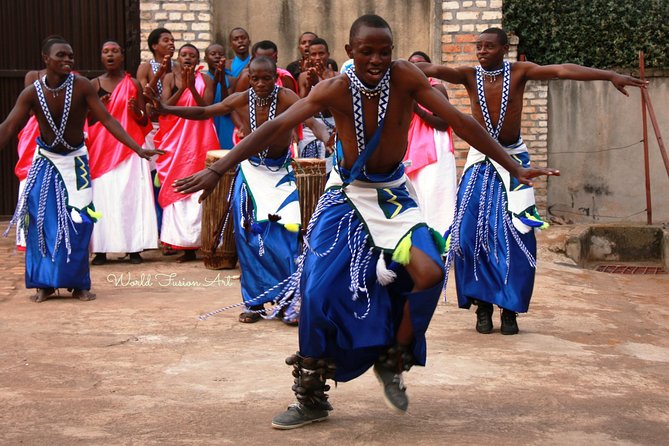
Bring your rhythm. This three-hour class gives you a friendly, hands-on way to learn Rwandan dance, understand why dancers imitate cattle, and try traditional drumming yourself. I like the welcoming songs and live percussion at the start, and I like that the instructors teach complete beginners without expecting polished footwork.
The main point to consider is the location. Although this experience is often associated with Kigali, the meeting point is on NR1 in Gitarama, also called Muhanga, and transportation there is not included. You will also need at least two people to book, so solo visitors cannot reserve it alone.
In This Review
- Key points to know before booking
- Why this class is worth your afternoon
- The location: Kigali listing, Gitarama meeting point
- Starting with songs, drums, and a welcome
- Learning the steps one piece at a time
- The cattle movements give the lesson meaning
- Performing your new routine
- Taking your turn at the drums
- Handicrafts and the final shopping stop
- What the $61.54 price buys you
- Who should book this activity?
- Booking, cancellation, and practical details
- Should you book the Traditional Drumming and Dancing Class?
- FAQ
- Where does the Traditional Drumming and Dancing Class start?
- Where does the activity end?
- How long does the class last?
- Is transportation included?
- Is previous dance or drumming experience required?
- How many people are required to book?
- What is included in the price?
- Can I cancel for a full refund?
Key points to know before booking
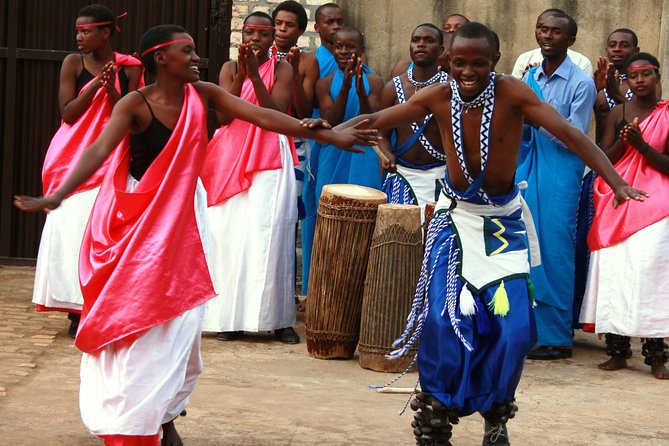
- Cattle-inspired movement: You learn why Rwandan dance includes gestures that imitate cows, an important cultural detail that gives the steps meaning.
- Friendly, active instruction: Expert dancers coach your feet, arms, and full body instead of leaving you to copy from a distance.
- A short group performance: You combine the steps into a traditional dance and perform with the instructors.
- Hands-on drumming: You get time to make your own rhythms, not just watch a demonstration.
- Handicrafts at the finish: The final shopping stop offers traditional gifts, including work made by artisans connected with the visit.
- Private booking: Only your group participates, though a minimum of two people is required.
Why this class is worth your afternoon
Many cultural activities ask you to sit quietly and watch. This one puts you in the middle of the action, even if your sense of rhythm needs a little help. You learn by moving, listening, asking questions, and trying again.
I especially like the way the class connects dance to Rwandan culture. The explanation of cattle movements is not just a fun fact. It helps you understand that the dance has meaning beyond exercise or stage entertainment. When you lift your arms, move your feet, and shape your body according to the instruction, you are learning a small piece of how Rwandan traditions express respect and celebration.
The class also has a warm social tone. It begins with welcoming songs and drumming, which helps break the ice before you are asked to perform. The instructors actively engage with the group rather than delivering a formal lecture. One useful tip is to prepare for a little friendly participation: someone in the group may be invited to offer a song, dance, poem, or another cultural contribution from home.
That moment can feel bold, but it is part of what makes the class memorable. You are not expected to be a professional performer. The emphasis is on sharing, trying, and having fun.
More cultural experiences in Kigali:
- Kigali: Mount Kigali and Cultural Village Tour with Snacks
★ 4.8 · 62 reviews - Kigali: Traditional Coffee Experience ( Bean to Brew)
★ 4.8 · 54 reviews - Kigali: Traditional Basket Weaving in a Garden
★ 4.8 · 41 reviews
The location: Kigali listing, Gitarama meeting point
Read the meeting details carefully before paying. The stated start point is NR1, Gitarama, Rwanda, and the activity ends back there. Gitarama is also known as Muhanga, so you may see both names used for the area.
This matters because the experience is connected with Kigali in its general tour description, but the supplied meeting point is outside Kigali proper. Transportation to and from Muhanga, or Gitarama, is not included. You should arrange your own way to the office and allow enough time to arrive before the morning or early afternoon session.
The published operating hours are 8:00 a.m. to 2:00 p.m., Monday through Sunday. Since the class lasts about three hours, confirm the precise starting time when you book. The meeting point is near public transportation, but the information does not specify the exact route, fare, or journey time.
This is the biggest practical drawback. If you are staying in Kigali and assumed the class would begin in the city, the transfer may take more planning than expected. If you are already near Gitarama, the location is much easier to manage.
Starting with songs, drums, and a welcome
The opening sets the mood quickly. At the office, you are introduced to the history of dancing in Rwanda and the reasons behind the cattle-inspired movements. Then welcoming songs and drumming greet your group.
I like this order. You receive context before being asked to copy steps, and the music makes the introduction feel like part of the culture rather than a classroom briefing. It also gives you a chance to settle in and watch how the instructors use rhythm, posture, and group energy.
The class is private, meaning only your group participates. That can make the activity more comfortable than a large public demonstration. You can ask questions directly and receive coaching without trying to compete for the instructor’s attention.
At the same time, private does not mean silent or passive. The atmosphere is built around participation. If you prefer to observe from the edge, this may feel more active than expected. If you enjoy being included, it is one of the class’s strongest points.
Learning the steps one piece at a time
After the introduction, expert dancers demonstrate the basic movements. You learn how to position and move your feet, arms, and entire body. The instructors then coach you through the practices, allowing short breaks along the way.
That step-by-step format makes the class suitable for beginners. You do not need previous dance experience, and there is no suggestion that you must arrive fit or coordinated. Still, you should have a moderate level of physical fitness because the session requires standing, moving, and repeating dance patterns for a substantial part of three hours.
The breaks are useful. Dance looks simple when someone else performs it, but matching footwork with arm movements can take concentration. Use the pauses to ask questions and reset your balance. The instruction specifically allows you to ask as many questions as you have, so do not worry about slowing the group down with a clarification.
I would treat the lesson as an introduction, not a full technical course. You will learn basic steps and practices, then bring them together for a short performance. The value comes from participation and cultural understanding, not from mastering an entire dance tradition in one afternoon.
A completely different kind of day:
- Kigali City Tour
★ 5.0 · 452 reviews - Kigali: Walking Tour with a Local Guide
★ 4.9 · 234 reviews - One-day Akagera National Park Game Drive with a Choice 4×4
★ 5.0 · 105 reviews - Private Full-day Kigali City Tour with Pickup and Lunch
★ 5.0 · 79 reviews
The cattle movements give the lesson meaning
The explanation of cattle movements is one of the class’s most distinctive details. Rwanda’s traditional dancing includes gestures that imitate cattle, and the instructors explain why those motions matter.
For you, this turns a series of arm lifts and body movements into something easier to remember. You are not simply copying a shape because it looks good. You are learning how an important part of daily and cultural life can be represented through performance.
The class description does not provide a long account of the tradition, so expect a practical introduction rather than an academic seminar. That is probably the right balance for a three-hour activity. You receive enough background to understand what you are doing, then spend most of the time putting that knowledge into motion.
Performing your new routine
Once you have practiced the individual movements, you combine them into a short traditional dance. This is the point where the class shifts from lesson to performance.
You will probably notice that remembering the sequence is harder than watching the demonstration. That is normal. The instructors lead you, and the group setting takes some pressure off. You do not need to perform alone unless the instructors invite an individual contribution.
The social side matters here. The class is designed to make people interact, and the instructors are described as friendly and highly engaged. You may be encouraged to share something from your own culture, such as a song, dance, or poem. Bring a light attitude and be ready to volunteer, or at least cheer on the person who does.
This performance is not about judging technique. It is the payoff for the earlier coaching and a chance to feel how the separate movements work together with music. If you are traveling with family or friends, the routine can become one of the easiest moments to remember from the day.
Taking your turn at the drums
After dancing, you try traditional drumming. You first receive instruction, then get the chance to lay down a few rhythms of your own.
The drumming section adds variety and gives you a different way to understand the music. Dance asks you to follow rhythm with your body. Drumming asks you to create and control that rhythm with your hands. You also have the freedom to dance while the music continues, so the two parts connect rather than feeling like separate activities.
Do not expect a long specialist drumming course. The available details point to an introductory session where you learn enough to try several beats and improvise. That is ideal if you are curious but have no musical background.
The best approach is to listen first, copy the basic rhythm, and then experiment. The atmosphere appears to favor enthusiasm over perfection. A missed beat is not a crisis. It is part of learning in front of a group.
Handicrafts and the final shopping stop
The activity finishes with time to shop for traditional handicrafts. The shop offers a wide range of high-quality gifts, including pieces made by artisans you visited.
This adds a useful connection between the cultural lesson and local craft work. You can choose a souvenir with a clearer link to the people and traditions introduced during the activity, rather than buying a generic item elsewhere.
Shopping is still optional. The price includes the class, guide, bottled water, local taxes, activities, and gratuities, but it does not include purchases. Set your own budget before you arrive, especially if handcrafted goods catch your eye.
I also appreciate that the shopping comes at the end. You get to spend the main part of the visit learning and participating, then browse at your own pace. It avoids turning the class into a sales stop from the beginning.
What the $61.54 price buys you
At $61.54 per person, this is not the cheapest way to spend three hours in Rwanda. The value depends largely on how much you want direct participation rather than a short cultural show.
Your fee covers a local guide, all activities, bottled water, local taxes, and gratuities. You also receive instruction from expert dancers, a dance performance, a drumming session, and access to handicrafts at the end. Because the activity is private, your group gets a more personal format than a large shared class.
The price makes the most sense for people who enjoy active cultural experiences. If you only want to watch Rwandan dance, a performance may cost less and require less physical effort. If you want to learn basic movements, ask questions, try the drums, and take part in a group routine, this class offers more contact for the money.
Group discounts are available, which can improve the value for families, couples, and small parties. Since two people are required per booking, solo visitors would need to arrange a second participant before booking.
Who should book this activity?
I would recommend it most strongly to:
- First-time visitors who want a simple introduction to Rwandan culture
- Couples, families, and friends who enjoy active group activities
- People with little or no dance or drumming experience
- Anyone who prefers meeting local instructors through participation
- Visitors who want to buy traditional handicrafts connected with the experience
It may be less suitable if you have limited mobility or do not feel comfortable standing and moving for much of a three-hour session. The stated fitness requirement is moderate, and the activity includes repeated dance practice.
You should also think carefully about the transfer from Kigali. The class itself lasts about three hours, but your total outing will be longer if you must travel to Gitarama and back. Transportation is your responsibility.
Booking, cancellation, and practical details
Confirmation is provided when you book. Free cancellation is available if you cancel at least 24 hours before the start time. Cancellations or changes made less than 24 hours before the local start time are not accepted for a refund.
Service animals are allowed, and the meeting point is near public transportation. The activity ends where it begins, at the Gitarama meeting point.
Bring comfortable clothing that allows your arms and legs to move freely. The supplied information does not state a dress code, so practical movement matters more than formal clothing. Bottled water is included, but you may still prefer to carry anything else you need for a three-hour active session.
Should you book the Traditional Drumming and Dancing Class?
Book it if you want to do more than watch. The friendly instructors, welcoming songs, cattle-inspired movements, improvised performance, and hands-on drumming give you a direct way to connect with Rwandan culture.
Before booking, solve the location question. Confirm that you can reach NR1 in Gitarama, also called Muhanga, since transport from Kigali is not included. If that arrangement works, the $61.54 cost is reasonable for a private, guided class with dance, drumming, water, and time to shop for local handicrafts.
FAQ
Where does the Traditional Drumming and Dancing Class start?
The activity starts at NR1, Gitarama, Rwanda. Gitarama is also referred to as Muhanga.
Where does the activity end?
The activity ends back at the meeting point in Gitarama.
How long does the class last?
The class lasts approximately three hours.
Is transportation included?
No. Transportation to and from Muhanga, also called Gitarama, is not included.
Is previous dance or drumming experience required?
No. The activity is designed for beginners, and no previous experience is necessary.
How many people are required to book?
A minimum of two people per booking is required.
What is included in the price?
The price includes gratuities, local taxes, bottled water, all listed activities, and a local guide.
Can I cancel for a full refund?
Yes, if you cancel at least 24 hours before the experience start time. Cancellations or changes made less than 24 hours before the start time are not accepted for a refund.
Just added in Kigali
- Gorilla Trekking Adventure – A Day trip (Only transfer)★ 5.0 · 2 reviews
- Rwanda One Day Gorilla Trekking with Iby’iwacu Culture Visit★ 5.0 · 2 reviews
- One Day Mt Bisoke Hike Adventure in Volcanoes Park ( 2 Pax Min)★ 5.0 · 1 review
- From Kigali: 8 Hour Day-trip Lake Kivu Cruise Experience★ 4.5 · 3 reviews
- Bar Hopping Tour in Kigali Nightclubs★ 4.0 · 3 reviews
- Most Innovative Full-Day Kigali Yacu Experience★ 5.0 · 2 reviews
- Kigali City Tour and Sightseeing★ 5.0 · 3 reviews
- Imigongo (cow dung art) Experience★ 5.0 · 1 review
Traditional Culture Experiences, compared.
Mount Kigali and Cultural Village Tour with Snacks
Read our review →

Guided Art, History, and Food Tour with Moto Ride
Read our review →
Kigali City Tour: History, Art and Local Highlights.
Read our review →
Browse the lists this tour appears in