
Reviewed · RWANDAN FOOD TOURS
Banana Juice Making at a Local Community
Bananas become a celebration here. This hands-on day in a Rwandan village takes you from cutting green bananas to sharing the finished juice at a community gathering. I like the direct work with local hosts and the generous time for conversation over lunch. The main drawback is the long day and the need to arrange your own way to Muhanga.
You begin at Azizi Life in Gitarama, then ride to the rural community with your guide. I also like that the activity is private to your group, with transport from Muhanga, lunch, water, taxes, and gratuities included. Book early, though: the community needs at least 96 hours to prepare the bananas, and a booking for only one person will not be accepted.
In This Review
- Key points to know before you go
- Why banana juice tells a bigger Rwandan story
- Starting at Azizi Life in Gitarama
- Cutting green bananas and preparing the pit
- Sharing cassava, beans, and conversation
- Digging up the bananas and making the juice
- More than banana juice: extra village activities
- The people make this private tour special
- The handicraft stop at the end
- Is $90 a fair price?
- Who will enjoy this day most?
- Timing, cancellation, and practical planning
- Should you book the banana juice experience?
- FAQ
- Where does the banana juice experience begin?
- Is transportation from Kigali included?
- How long does the experience last?
- What food is included?
- How far in advance should I book?
- Can one person book the activity?
- Can I cancel for a full refund?
Key points to know before you go

- The banana process takes the whole day: You cut green bananas, bury them in a ground pit, eat lunch, then return to dig them up and continue making juice.
- Lunch is part of the cultural exchange: Expect a traditional meal such as cassava and beans, with time to ask questions and talk with your hosts.
- The day begins at Azizi Life: The meeting point is on NR1 in Gitarama, also called Muhanga, before transport continues to the village.
- You take part rather than watch: Water carrying, food preparation, banana cutting, and other tasks may all be part of the day.
- The finish includes local shopping: A handicraft stop gives you a chance to buy a souvenir and support community artisans.
- Plan for a moderate amount of physical work: The day involves walking, cutting, digging, carrying, and standing for periods of time.
Why banana juice tells a bigger Rwandan story
Banana juice is more than a drink in this setting. It is often served at Rwandan weddings and parties, so learning to make it gives you a practical connection to occasions that matter in everyday community life.
The appeal is the work. You do not simply sit at a table while someone explains a recipe. You help collect green bananas, cut them, and place them in a hole in the ground so they can ripen. Later, after lunch, you dig them up and continue with the juice-making process.
That pause between preparation and tasting is useful. It shows you that local food traditions are tied to time, labor, and shared responsibility. The bananas are not treated as a quick snack. They are handled as part of a process that brings people together.
This also makes the experience different from a standard city tour in Kigali. You spend much of the day in a rural community, meeting the family hosting you and working beside local artisans. If you want a polished sightseeing program with constant movement, this may feel slow. If you prefer conversation and participation, the pace is a strength.
More food tours in Kigali:
- Rwanda Half-Day Walking Food Tour
★ 5.0 · 35 reviews - Kigali: Guided Art, History, and Food Tour with Moto Ride
★ 4.9 · 34 reviews - Kigali: Learn How to Make Hot Sauce from Scratch
★ 5.0 · 12 reviews
Starting at Azizi Life in Gitarama
Your day starts at the Azizi Life centre on NR1 in Gitarama, commonly called Muhanga. The guide gives you a briefing before you leave for the rural community, which is a helpful chance to understand the schedule and ask practical questions.
Transport from Muhanga to the village and back is included. Transportation to Muhanga itself is not included, but the provider can arrange it for an extra payment. This detail matters because the activity is not a simple Kigali pickup tour. You need to plan how you will reach the meeting point.
The average booking lead time is about 12 days, but the important rule is earlier than that. The supplier needs a minimum of 96 hours before the start time so the bananas can be prepared. If you book too late, you may be asked to move the date.
The experience lasts about five to eight hours, with the supplied schedule describing an eight-hour day. Leave plenty of room in your plans. This is not a quick morning activity that you can squeeze between major Kigali sights.
Cutting green bananas and preparing the pit
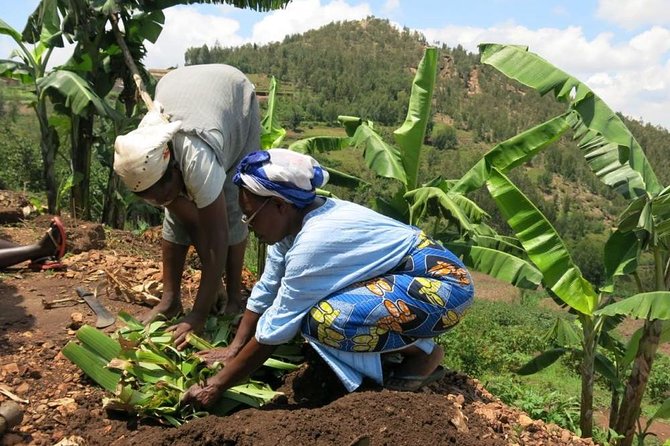
At the village, local artisans welcome you and introduce you to the family hosting your group. The first work is straightforward but physical: you cut and collect green bananas, then help dig a hole in the ground.
The bananas go into the hole to ripen. This is one of the most memorable parts because it turns an ordinary food item into the center of the day. You see the beginning of the process, help set it up, and later return to check the result.
Do not expect every task to be arranged like a cooking class in a studio. The work takes place in a rural community, and the value comes from doing things in the local setting. Depending on the needs of the hosts, you may also help fetch water or assist with food preparation.
That flexibility is worth understanding before you book. The day is guided, but it is not built around a rigid series of demonstrations. You are joining the rhythm of a household and community for several hours.
Sharing cassava, beans, and conversation
Lunch gives the day its social center. A traditional Rwandan meal may include cassava and beans, and bottled water is included.
The food itself is only part of the point. You have time to sit with your hosts, ask about life in the community, and answer questions about your own home country. That two-way conversation can be more meaningful than a lecture because you are meeting people through an ordinary shared meal.
I would treat lunch as a chance to slow down. The schedule allows about an hour, so you are not expected to rush through your plate before the next activity. If you are curious about daily life in rural Rwanda, this may be the part of the day that stays with you longest.
The meal may be simple rather than elaborate. That is appropriate here. You are not paying for a restaurant tasting menu. You are sharing food prepared in a household setting, with the chance to see how the hosts organize the day.
A completely different kind of day:
- Kigali City Tour
★ 5.0 · 452 reviews - Kigali: Walking Tour with a Local Guide
★ 4.9 · 234 reviews - One-day Akagera National Park Game Drive with a Choice 4×4
★ 5.0 · 105 reviews - Private Full-day Kigali City Tour with Pickup and Lunch
★ 5.0 · 79 reviews
Digging up the bananas and making the juice
After lunch, you return to the pit and dig up the bananas. The fruit has had time to ripen, and you can begin the next stage of the juice-making process.
This second visit to the bananas gives the activity a satisfying shape. You see the result of your morning work instead of receiving a finished drink without context. The juice becomes connected to the cutting, lifting, burying, waiting, and digging that came before.
The exact tools and methods are not specified, so you should expect the guide and hosts to direct you through the steps on site. The important point is that you participate in making the drink, not merely taste it.
The juice has received high praise from the people who have taken part, with its flavor and the sense of accomplishment singled out as highlights. One particularly warm account describes the day ending with dancing and laughter. Those details suggest that the final stage can feel social and informal, rather than like a formal class with everyone quietly watching.
More than banana juice: extra village activities
The experience can include more than the core banana work. You might help fetch water, assist with food preparation, weave, or work with crops. One account also describes feeding cows after helping harvest nappier grass.
These additions are not presented as guaranteed stops with fixed times, so I would not book this solely for a specific extra task. Think of them as possible ways to take part in community life if the opportunity fits the day.
Traditional clothing may also be available. A participant was dressed by one of the local women and shown the banana juice process while taking part in weaving and crop-related work. If this interests you, ask your guide what is possible rather than assuming it will be included for every group.
The best attitude is to remain open but respectful. You are entering a working community, not a stage set. Follow the guide’s instructions, accept that the schedule may adjust, and take care with photography and personal questions.
The people make this private tour special
This is a private activity, so only your group takes part. That can make a real difference in a village setting. You have more room to ask questions, work at a comfortable pace, and speak with the hosts without competing with a large crowd.
The experience requires at least two people per booking. A child rate is available only when the child shares the activity with two paying adults.
The hosts are artisan partners connected with Azizi Life, and the day is designed around direct contact with them. The warm welcome, shared jokes, traditional clothing, weaving, dancing, and conversation are the most praised parts of the experience.
No guide names are supplied, so I cannot point you to a particular individual. Your guide’s role is to brief you, manage the transport, introduce you to the host family, and help the activities run smoothly.
The handicraft stop at the end
Before returning to the meeting point, you stop at a local handicraft store. This is a practical finish to the day because you can look for a souvenir made in the area rather than buying a generic item at a roadside stop.
The visit also connects with the work of the artisans you met earlier. If you want to support local makers, this is a good place to spend a little extra time and money.
Still, treat shopping as an optional ending, not the main reason to book. The heart of the experience is the village visit and banana juice process. The shop adds value, but it does not replace the community interaction.
Is $90 a fair price?
At $90 per person, this is not the cheapest way to spend a day near Kigali. The price makes more sense when you count what is included: a local guide, transport between Muhanga and the village, lunch, bottled water, local taxes, and gratuities.
You are also paying for a private activity and for preparation that begins before you arrive. The bananas need to be ready at the correct stage, and the community has to organize the visit. That planning is part of the cost, even though you do not see it on the day.
The value depends on what you want. If you mainly want a low-cost meal or a quick rural photo stop, $90 may feel high. If you want a full day of practical cultural exchange, food, transport from Muhanga, and support for a community-based program, the price is easier to justify.
Group discounts are available, which may improve the value for families or small groups. Ask about the current discount when booking, since the exact reduction is not provided here.
Who will enjoy this day most?
I would recommend it to you if you like hands-on food traditions, village visits, and unhurried conversation. It suits people who want to do some work, ask questions, and spend time with a host family rather than hurry from one sight to another.
It is also a strong choice if you have already seen Kigali and want a more rural experience. The day offers a look at food preparation, community life, craft work, and hospitality in one program.
You should think twice if you dislike dirt, digging, carrying, or an adjustable schedule. A moderate fitness level is required, and the work may include cutting bananas, digging a pit, fetching water, and helping with crops.
Families can consider it, but the child-rate rule is specific. A child must share with two paying adults to receive the child price. Service animals are allowed, and the meeting point is near public transportation.
Timing, cancellation, and practical planning
Confirmation is sent within 48 hours of booking, subject to availability. Because the bananas need preparation, book at least 96 hours before the start time. Booking around 12 days ahead gives you a more comfortable margin.
Free cancellation is available until 24 hours before the local start time. If you cancel or request changes inside that 24-hour window, you will not receive a refund and changes will not be accepted.
Bring a willingness to work and clothing suited to a rural day. The supplied information does not list a specific dress code or equipment list, so ask the provider if you have concerns about footwear, clothing, or weather.
Plan your route to NR1 in Gitarama, also known as Muhanga. The activity ends back at the same meeting point, and transport to and from the village is included. Transport from another starting point can be arranged for an additional fee.
Should you book the banana juice experience?
Book this if you want a personal, participatory day and are happy to trade sightseeing speed for time with a Rwandan host family. The strongest reasons to go are the full banana process, the shared cassava and beans lunch, the chance to help with ordinary tasks, and the joyful social finish with dancing and laughter.
Skip it if you want a short class, a guaranteed list of extra farm activities, or a tour that begins and ends in central Kigali with all transport included. For the right visitor, $90 buys more than a drink. It buys a day shaped by work, food, questions, and welcome.
FAQ
Where does the banana juice experience begin?
It begins at the Azizi Life centre on NR1 in Gitarama, also called Muhanga, Rwanda.
Is transportation from Kigali included?
No. Transportation to and from Muhanga is not included, but the provider can arrange it for an additional payment. Transport from Muhanga to the village and back is included.
How long does the experience last?
The activity lasts approximately five to eight hours. The schedule describes an eight-hour experience.
What food is included?
Lunch and bottled water are included. Lunch may include traditional Rwandan food such as cassava and beans.
How far in advance should I book?
You must book at least 96 hours before the experience so the community can prepare the bananas. Confirmation is sent within 48 hours, subject to availability.
Can one person book the activity?
No. A minimum of two people per booking is required.
Can I cancel for a full refund?
Yes, if you cancel at least 24 hours before the local start time. Cancellations or changes made less than 24 hours before the start time are not accepted for a refund.
Just added in Kigali
- Traditional Drumming and Dancing Class★ 5.0 · 2 reviews
- Gorilla Trekking Adventure – A Day trip (Only transfer)★ 5.0 · 2 reviews
- Rwanda One Day Gorilla Trekking with Iby’iwacu Culture Visit★ 5.0 · 2 reviews
- One Day Mt Bisoke Hike Adventure in Volcanoes Park ( 2 Pax Min)★ 5.0 · 1 review
- From Kigali: 8 Hour Day-trip Lake Kivu Cruise Experience★ 4.5 · 3 reviews
- Bar Hopping Tour in Kigali Nightclubs★ 4.0 · 3 reviews
- Most Innovative Full-Day Kigali Yacu Experience★ 5.0 · 2 reviews
- Kigali City Tour and Sightseeing★ 5.0 · 3 reviews
Rwandan Food Tours, compared.

Guided Art, History, and Food Tour with Moto Ride
Read our review →
Local Community Tour(Cultural, Coffee,Village walk,Local food)
Read our review →

Browse the lists this tour appears in