
Reviewed · KIGALI CITY TOURS
Kigali City Tour and Sightseeing
Kigali begins with a story worth hearing. This private five-and-a-half-hour tour links the city’s most important memorials, museums, market, and hilltop views in one well-planned outing. I like the flexible format, and I especially like that your group travels privately rather than being folded into a large bus tour.
The guide can make or break a city tour, and Jabil receives especially strong praise for his patience, energy, cultural knowledge, and command of Rwanda’s past. The main consideration is the price: at $166.68 per person, it offers good value for a private half-day, but less so if you only want a quick orientation or plan to visit Kigali’s sights on your own.
In This Review
- Key points to know before you book
- Why this is a useful first day in Kigali
- Two hours at the Kigali Genocide Memorial
- One hour among the stalls at Kimironko Market
- Thirty minutes at the Belgian Peacekeepers Memorial
- One hour inside the Campaign Against Genocide Museum
- One hour above the city at Mount Kigali
- What the $166.68 price buys you
- Who will get the most from this city tour
- Should you book the Kigali City Tour?
- FAQ
- How long does the Kigali City Tour last?
- Is hotel or location pickup available?
- Is this a private tour?
- What places are included?
- Are admission tickets included?
- How much does the tour cost?
- Can I cancel for a full refund?
Key points to know before you book
- Five major stops in 5 hours 30 minutes: You visit the Kigali Genocide Memorial, Kimironko Market, Belgian Peacekeepers Memorial, Campaign Against Genocide Museum, and Mount Kigali.
- A private experience: Only your group participates, giving you more room to ask questions and adjust the pace.
- Guide Jabil earns the strongest praise: His patience, friendliness, energy, and understanding of Rwanda’s culture are central to the experience.
- The memorial sites require emotional attention: This is not a light sightseeing loop. Much of the day deals with genocide, loss, and national memory.
- Kimironko Market adds daily life: After the memorials, the market brings you closer to local food, fabrics, vegetables, and Made-in-Rwanda goods.
- Pickup and mobile tickets simplify the start: Confirmation arrives at booking, pickup is offered, and the tour is near public transportation.
Why this is a useful first day in Kigali
Kigali is not a city you understand from a car window alone. Its roads, hills, markets, memorials, and public institutions tell different parts of the same story. This tour gives you a structured introduction soon after arrival, which can help you make sense of the rest of your time in Rwanda.
I like the balance between serious sites and ordinary city life. The Kigali Genocide Memorial and the two memorial museums explain Rwanda’s recent past, while Kimironko Market shows what people buy, sell, cook, and wear today. Mount Kigali then gives the day a change of pace.
The tour is private, so you can ask for clarification without worrying about slowing down a large group. That matters most at the memorial sites, where the subject is painful and the right amount of time varies from person to person.
Your guide also matters here. Jabil is singled out for being friendly, patient, energetic, and well informed about Rwandan culture and history. Those qualities are more useful than a polished speech. You want someone who can explain difficult subjects clearly, listen to your questions, and adjust the conversation when needed.
The schedule is full. The five stops add up to five and a half hours before you account for driving between them, so this is a focused tour rather than a slow, wandering day. You will see a lot, but you should not expect long free periods at each location.
More things to do in Kigali:
- Kigali City Tour
★ 5.0 · 452 reviews - Private Full-day Kigali City Tour with Pickup and Lunch
★ 5.0 · 79 reviews - Kigali City Tour
★ 5.0 · 59 reviews
Two hours at the Kigali Genocide Memorial
The Kigali Genocide Memorial is the emotional center of the tour. It commemorates the 1994 genocide against the Tutsi, and the remains of more than 250,000 people are interred there.
The visitor center is designed to help students and the wider public understand the events that led to the genocide and what happened during 1994. You should expect this stop to require attention. It is not simply a monument for a quick photograph.
The two-hour allocation is sensible. The memorial needs time for its exhibitions, remembrance spaces, and reflection. If you rush through, you will miss the point of beginning the city tour here.
I value this stop because it provides essential context for the rest of Kigali. The Belgian Peacekeepers Memorial and Campaign Against Genocide Museum make more sense after you have learned the basic sequence of events and the human cost.
This part of the day may be difficult, particularly for anyone unfamiliar with the subject. That is not a fault in the tour, but it is something you should prepare for. If you prefer a purely scenic introduction to Kigali, this itinerary will feel serious from the outset.
Admission is listed as free. The guide’s role is especially important here, since the memorial’s material can raise questions that are hard to answer from a brief visit alone.
One hour among the stalls at Kimironko Market
Kimironko Market is described as the busiest market in Kigali, and it supplies the day’s clearest look at ordinary commerce. The market carries Made-in-Rwanda products, fabrics for clothing, local food, vegetables, and souvenirs.
This is where I like the tour’s contrast. After two hours focused on national tragedy, you shift to color, trade, food, and household life. The market does not erase the earlier visit. It shows the present-day city continuing its daily work.
A one-hour stop is enough for an introduction, though it will not allow you to inspect every stall. You might find fabrics that interest you, locally made items to take home, or vegetables and food products that you would not encounter in a hotel area.
The market is also a useful place to ask your guide about what you are seeing. Product names, clothing fabrics, and food customs can be difficult to understand without local context. Jabil’s cultural knowledge should be particularly helpful here.
The main drawback is that markets can feel less predictable than museums. You may find exactly what you hoped to see, or you may prefer simply to observe. The schedule gives you a set amount of time, so tell your guide if you want to focus on shopping, food, or conversation.
If buying souvenirs matters to you, this is likely the best stop for it. The tour description specifically points to Made-in-Rwanda products, fabrics, local food, vegetables, and souvenirs, so you are not limited to imported trinkets.
Thirty minutes at the Belgian Peacekeepers Memorial
The Belgian Peacekeepers Memorial marks the place where ten Belgian United Nations peacekeepers were killed by Hutu extremists. Their deaths were intended to provoke the withdrawal of UN forces, clearing the way for the genocide to unfold on a much larger scale.
The stop lasts about 30 minutes, which is appropriate for a compact memorial site. It is not meant to replace the longer visit at the Kigali Genocide Memorial. Instead, it adds a specific event to the wider explanation of 1994.
This stop is valuable because it shows how international decisions and local violence became connected. The memorial is not only about the ten soldiers. It also helps explain why the removal of UN forces mattered during the crisis.
You will want to listen closely here. A short stop can contain a great deal of political and military context, and a good explanation is more useful than simply seeing the site. Again, Jabil’s patient approach should help if you need the sequence repeated or clarified.
There is no admission fee listed for this stop. Because it is brief, do not expect a large museum-style presentation. Its importance comes from the event it marks and the way it fits into the day’s larger account.
A completely different kind of day:
- Kigali: Walking Tour with a Local Guide
★ 4.9 · 234 reviews - One-day Akagera National Park Game Drive with a Choice 4×4
★ 5.0 · 105 reviews - Kigali Walking Tour
★ 4.5 · 78 reviews - Kigali E-Bike City Tour with Breakfast
★ 4.9 · 73 reviews
One hour inside the Campaign Against Genocide Museum
The Campaign Against Genocide Museum occupies Rwanda’s parliamentary building and was opened in 2017 by Paul Kagame. It is one of eight museums managed by the Rwanda Cultural Heritage Academy.
Its focus is the campaign against the genocide against the Tutsi. The museum helps explain Rwanda during the period when the campaign took place, adding a political and institutional layer to the personal stories and memorial spaces visited earlier.
I appreciate the placement of this museum after the Belgian Peacekeepers Memorial. The earlier stop explains the loss of the UN peacekeepers and the consequences of their deaths. This museum then broadens the story to include Rwanda’s campaign and the country’s own account of those events.
One hour should give you time for a solid visit without making the day feel dominated by museum interiors. Still, the subject matter remains serious. You should not expect this to be a casual sightseeing stop.
The museum is housed in a working national setting, which gives it a different character from the Kigali Genocide Memorial. The tour does not present five unrelated attractions. It builds an account through several places, each with a different purpose.
Admission is listed as free. Ask questions as you go, especially if you want to understand how the museum’s presentation connects with the earlier memorials.
One hour above the city at Mount Kigali
Mount Kigali, also called Mont Kigali in French, is the hill after which Kigali was named. It lies directly west of the city center in Nyarugenge District, much of which is located on the slopes of the hill.
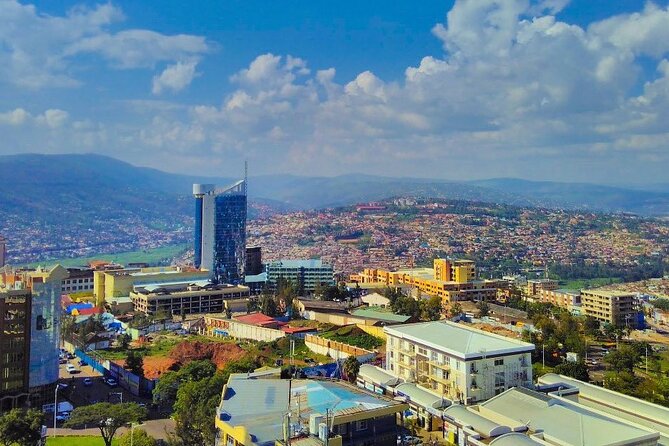
This final stop gives the itinerary breathing room after several difficult historical sites. You get a physical sense of Kigali as a hill city, and the elevated position helps you understand how the city is arranged.
The tour description does not promise a specific viewpoint, trail, or activity at Mount Kigali, so keep your expectations practical. This is a city sightseeing stop on a named hill, not a detailed mountain excursion. You might find the value comes mainly from the setting and the chance to see Kigali from a different angle.
A full hour is generous compared with the 30-minute memorial visit. That gives your group more time to pause, look around, and ask about the districts spread across the hills.
Ending here is a good choice. The day moves from remembrance and explanation toward a broader view of the city. You leave with a sense of Kigali as both a place shaped by its past and a functioning capital with markets, neighborhoods, institutions, and hills.
What the $166.68 price buys you
At $166.68 per person, this is not a budget city loop. The value rests in the private format, the included guide, the pickup option, and the amount of historical interpretation packed into five and a half hours.
A private tour is especially useful in Kigali because the itinerary covers very different kinds of places. You may want more explanation at the genocide memorial, more time at Kimironko Market, or a quicker visit at one of the museums. A private group gives you a better chance to discuss those preferences.
The cost is easier to justify if you are traveling with family or friends and want a dedicated vehicle and guide for your group. It is also a practical choice if you have limited time in Kigali and want to cover the major introductory sites in one outing.
The price is harder to justify if you are a solo visitor focused only on scenery, shopping, or a short city drive. In that case, you are paying for depth and privacy, not just transportation between attractions.
The tour is commonly booked about 41 days ahead, which suggests you should not leave it until the last minute if your Kigali dates are fixed. Confirmation is provided at booking, and the mobile ticket makes the reservation easy to keep on your phone.
Pickup is offered, and the tour is near public transportation. Most people can participate, according to the supplied details. Free cancellation is available when you cancel at least 24 hours before the local start time. Cancellations or changes made inside that window are not accepted for a refund.
Who will get the most from this city tour
I would recommend this experience to you if you want Kigali explained rather than merely photographed. It suits first-time visitors, families, couples, and small groups who want a private introduction with a guide who can connect memorials, museums, markets, and geography.
It is also a good fit if Rwanda’s 1994 genocide is an important part of your learning goal. The itinerary gives that subject proper time instead of treating it as a quick stop between shopping and views.
You should also consider it if you have only one open day in Kigali. Five major stops in five and a half hours make efficient use of your time, although the schedule leaves little room for unplanned detours.
I would be more cautious if you want a relaxed food tour, extensive shopping, or a nature-focused outing. Kimironko Market receives only one hour, and Mount Kigali is presented as a city hill visit rather than a full outdoor adventure.
The tour’s strongest feature is the human element. Jabil is praised for patience, friendliness, energy, and a broad understanding of Rwandan culture and history. A guide with those qualities can make a difficult subject easier to approach and a market visit more meaningful.
Should you book the Kigali City Tour?
Book it if you want a private, structured introduction to Kigali that takes the city’s past seriously while still showing you a market and a hilltop setting. The best reason to choose it is the combination of five major stops and a guide who appears to bring real patience and enthusiasm to the work.
Think twice if $166.68 feels high for a half-day or if you prefer to set your own pace. The schedule is full, the subject matter is heavy, and the price depends on you valuing private guidance.
For a first visit to Rwanda, I see this as a strong orientation tour. It gives you the background to understand Kigali, the chance to meet local life at Kimironko Market, and the flexibility of traveling only with your own group.
FAQ
How long does the Kigali City Tour last?
The tour lasts approximately 5 hours and 30 minutes.
Is hotel or location pickup available?
Yes. Pickup is offered.
Is this a private tour?
Yes. Only your group participates in the activity.
What places are included?
The tour visits the Kigali Genocide Memorial, Kimironko Market, Belgian Peacekeepers Memorial, Campaign Against Genocide Museum, and Mount Kigali.
Are admission tickets included?
Admission is listed as free for all five stops.
How much does the tour cost?
The listed price is $166.68 per person.
Can I cancel for a full refund?
Yes, if you cancel at least 24 hours before the experience start time. Cancellations or changes made less than 24 hours before the start time are not accepted for a refund.
Just added in Kigali
- Gorilla Trekking Adventure – A Day trip (Only transfer)★ 5.0 · 2 reviews
- Rwanda One Day Gorilla Trekking with Iby’iwacu Culture Visit★ 5.0 · 2 reviews
- Traditional Drumming and Dancing Class★ 5.0 · 2 reviews
- One Day Mt Bisoke Hike Adventure in Volcanoes Park ( 2 Pax Min)★ 5.0 · 1 review
- From Kigali: 8 Hour Day-trip Lake Kivu Cruise Experience★ 4.5 · 3 reviews
- Bar Hopping Tour in Kigali Nightclubs★ 4.0 · 3 reviews
- Most Innovative Full-Day Kigali Yacu Experience★ 5.0 · 2 reviews
- Imigongo (cow dung art) Experience★ 5.0 · 1 review
Kigali City Tours, compared.

Private Full-day Kigali City Tour with Pickup and Lunch
Read our review →
Kigali City Tour: History, Art and Local Highlights.
Read our review →
Browse the lists this tour appears in