
Reviewed · TRADITIONAL CULTURE EXPERIENCES
A Day in the Life of a Local Artisan
Rural Rwanda is best understood at household level. This eight-hour Azizi Life experience takes you from the meeting point in Gitarama to a village community, where you can help with farming, fetch water, prepare food, and learn a simple sisal weaving project. I like the small private-group format, limited to six people, and I like that lunch is the same kind of vegetarian food your host family normally eats.
The day offers something more useful than a quick photo stop: time to talk, work, laugh, and ask questions. The main consideration is physical comfort. You should expect uneven surfaces, outdoor chores, and a moderate level of activity. Transport from Kigali is not included in the $90 price, although it can be arranged for an added charge.
In This Review
- Key points to know before booking
- What this Azizi Life day is really about
- Starting at NR1 in Gitarama
- Meeting your hosts in the village
- Farming, water, and the work behind lunch
- Cooking with the family
- Two hours learning sisal weaving
- Food, music, and conversation are part of the visit
- What the $90 price covers
- Who will enjoy this most
- Practical advice for a smoother day
- Should you book A Day in the Life of a Local Artisan?
- FAQ
- Where does the experience start?
- Is transportation from Kigali included?
- What transportation is included?
- How long does the experience last?
- What food is served for lunch?
- What craft will I learn?
- Can I buy handicrafts?
- How many people can join?
- Is cancellation free?
Key points to know before booking
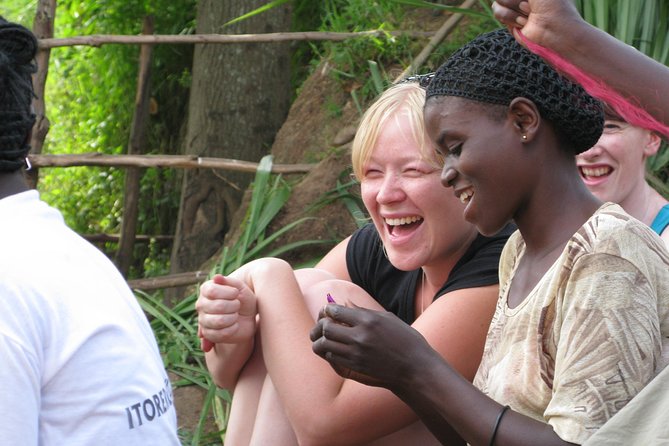
- A working visit, not a staged village show: You may hoe a garden, plant crops, fetch water, cut grass for cows, help cook, and take part in other daily tasks.
- Small groups make conversation easier: The experience is limited to six people, and the activity is listed as private for your own group.
- Two hours of one-to-one weaving instruction: You learn to make a simple item from sisal, with time to buy local handicrafts afterward.
- Lunch is simple and local: Expect vegetarian Rwandan food such as cassava and beans, prepared as the family would normally eat it.
- The $90 price includes the core day: A guide, tour host, bottled water, lunch, gratuities, and return transport from Muhanga Town to the village are covered.
- Plan the Kigali connection carefully: Transport from Kigali is extra, and the listed meeting point is on NR1 in Gitarama, not central Kigali.
What this Azizi Life day is really about
Azizi Life presents rural life through participation. You are not simply driven to a village, shown a craft, and sent back to the city. The plan gives you useful work to do, followed by food, conversation, and a focused craft lesson.
That matters because rural life can be hard to understand from a vehicle window. A short walk to collect water, a turn with a hoe, or time spent preparing cassava and beans gives you a better sense of the work behind an ordinary meal. You also have time to ask about community life and share stories from home.
The setting is designed for exchange rather than performance. Your hosts may ask questions about your own country, and the day works best if you arrive ready to talk, listen, and try unfamiliar tasks without worrying about looking graceful. You may be better at weaving than farming, or the other way around. That is part of the fun.
The activity has earned a five-star rating with 100 percent recommendation from the supplied booking information, based on 14 reviews. The praise is remarkably consistent: warm hosts, good food, useful cultural insight, beautiful countryside views, and hands-on activities. Several accounts also describe singing, dancing, jokes, and plenty of time for conversation.
More cultural experiences in Kigali:
- Kigali: Mount Kigali and Cultural Village Tour with Snacks
★ 4.8 · 62 reviews - Kigali: Traditional Coffee Experience ( Bean to Brew)
★ 4.8 · 54 reviews - Kigali: Traditional Basket Weaving in a Garden
★ 4.8 · 41 reviews
Starting at NR1 in Gitarama
The formal meeting point is NR1 in Gitarama, also known as Muhanga. The day begins with a briefing before you travel onward to the village. The supplied schedule lists activity hours between 8:00 a.m. and 11:00 a.m. from Monday through Sunday, but the experience itself lasts about eight hours, so confirm your exact start time when booking.
This location is the first practical detail to sort out. The $90 rate does not include transport from Kigali. A transfer can be arranged for an additional cost, but you should request it in advance rather than assume a Kigali hotel pickup is part of the standard package.
The included return transport is described as running from Muhanga Town to the village and back to the meeting point. That makes the experience easiest if you are already arranging your own way to Gitarama. If you are staying in Kigali, ask Azizi Life to confirm the extra transfer price, pickup point, and expected return time before you commit to the day.
The opening briefing should help you understand the schedule and set expectations. It is also the right moment to mention dietary needs, physical concerns, and any questions about the chores. Confirmation is received at booking, and at least two people are required for a reservation.
Meeting your hosts in the village
After the drive, you are welcomed by local artisans and introduced to the people who will guide the day. The experience has a strong connection to women’s cooperatives, with handmade baskets, jewelry, and woven goods among the products associated with the artisan partners.
The human side is the main reason to book. Several host names appear in the experience feedback, including Theogene and Rose, while Richard is described as a friendly driver and guide who shared personal stories during the journey. Your own host may be different, but Azizi Life clearly places a guide or interpreter close by when language support is needed.
Do not expect a lecture filled with dates and formal presentations. The information comes while you work. You may hear about household routines, farming, craft production, and local challenges as you walk, cook, and sit together. One account also describes a guide discussing family experiences connected with the 1994 genocide and the difficulty of finding work. These are serious subjects, and you should let your hosts decide what they wish to share.
The visit is most rewarding when you treat the family as hosts rather than as part of a display. Ask polite questions, accept instruction, and understand that the pace may not match a tightly timed city tour. The flexibility is useful, but it also means the day may feel less polished than a standard sightseeing package.
Farming, water, and the work behind lunch
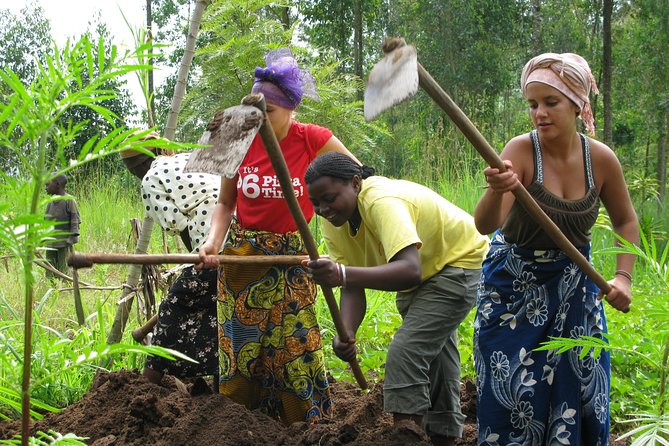
The first active part of the day introduces you to subsistence farming. You may hoe a field or help plant crops, depending on what is happening in the community at the time. You might also cut grass for cows or take part in other basic chores.
These jobs are not difficult to understand, but they can be tiring. The tour information warns of uneven surfaces and calls for moderate physical fitness. Wear sturdy shoes that you can use outdoors, and choose clothing that allows you to bend, walk, and work without fuss.
Fetching water is another central activity. It gives you a plain, memorable lesson in how much effort can sit behind something as basic as cooking or washing. The experience does not pretend that one short walk makes you an expert in village life. It simply lets you feel a small part of the routine.
The farming section is also where the day feels least like sightseeing. You are working beside people who do these jobs as part of daily life, not performing a task invented for tourists. That can be humbling. You may be slow with the hoe, and your hosts may laugh kindly while showing you how to do it better.
A completely different kind of day:
- Kigali City Tour
★ 5.0 · 452 reviews - Kigali: Walking Tour with a Local Guide
★ 4.9 · 234 reviews - One-day Akagera National Park Game Drive with a Choice 4×4
★ 5.0 · 105 reviews - Private Full-day Kigali City Tour with Pickup and Lunch
★ 5.0 · 79 reviews
Cooking with the family
After the outdoor work, you may help prepare lunch. The meal is vegetarian and based on familiar Rwandan staples, including cassava and beans. It is not a separate restaurant menu designed for foreign tastes. You eat what the family would normally eat, which is one of the strongest features of the day.
Lunch lasts about an hour, giving you time to slow down after the chores. The food received repeated praise, and that makes sense: a simple meal becomes more memorable when you helped prepare it and are eating it with the people who made it.
Use this pause for conversation. You can ask about food, family routines, farming, craft work, and community life. Your hosts may also be curious about where you live. A guide or interpreter can help keep the conversation moving if needed.
The meal is vegetarian by design, so this is a good choice if you are happy with a plant-based lunch. If you have allergies or strict dietary requirements, tell the operator ahead of time. The supplied information confirms the general style of food but does not provide a detailed menu.
Two hours learning sisal weaving
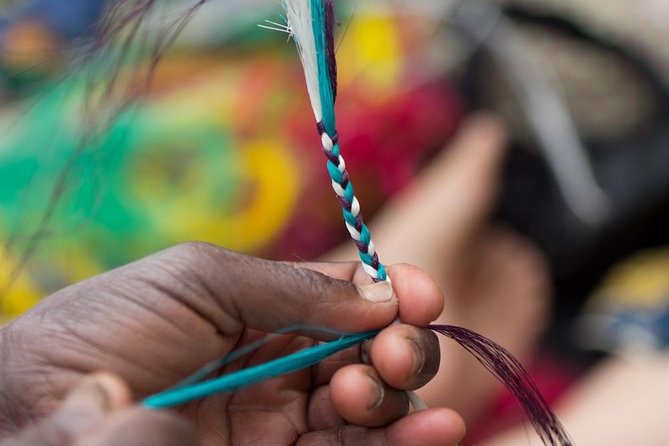
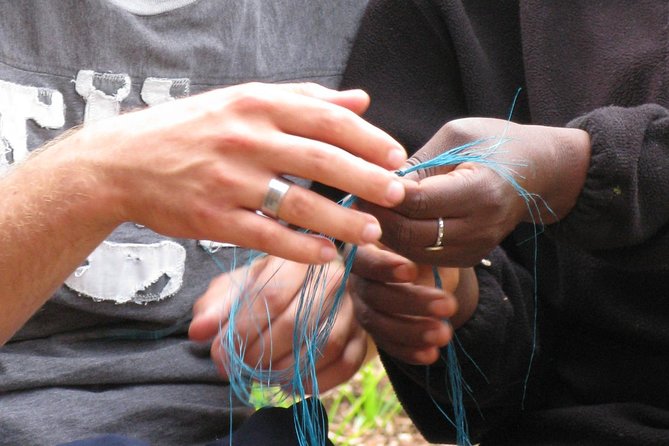
The craft lesson is the most structured part of the experience. You receive about two hours of one-to-one instruction in weaving a simple item from sisal.
Sisal weaving rewards patience more than artistic talent. You will learn by watching, copying, and correcting your hands as you go. A private lesson gives you more room to ask questions than a quick demonstration, and the two-hour length means you have a real chance to finish something rather than merely handle the materials.
This is also a useful window into the cooperative’s work. Handmade baskets, jewelry, and other woven goods are made for sale, so the lesson connects a finished object with the labor and skill behind it. You can purchase local handicrafts at the end, but those items are not included in the tour price.
The craft section may be the best part of the day for children and teenagers who enjoy making things. It also gives adults a calmer hour after farming and water collection. If you are not confident with crafts, do not worry about producing a perfect object. The value is in learning the process and spending focused time with the artisan.
The experience can involve different artisan skills. Accounts connected with Azizi Life describe pottery, including collecting clay from a nearby river and making a chosen object, as well as basket and jewelry production. For this particular day, the stated lesson is sisal weaving, so ask ahead if you are hoping specifically for pottery or another craft.
Food, music, and conversation are part of the visit
The schedule is practical, but it is not all chores. Singing, dancing, shared jokes, and relaxed conversation are part of the social welcome described for this experience. These moments can be as valuable as the formal activities because they allow the relationship to develop naturally.
You should still keep your expectations realistic. The day is not a guaranteed cultural performance with a fixed music program. The exact mix of activities may depend on the hosts, season, and household work taking place. That flexibility is part of meeting a real community, but it means you should not book it expecting every possible activity to happen in a set order.
The social welcome seems to be the most praised part of the experience. Descriptions repeatedly emphasize patient, generous, hard-working women and hosts who make visitors feel comfortable. A birthday cake and singing were arranged for one longer stay, showing the warmth Azizi Life can bring to a group, though a special celebration should not be assumed during a standard day visit.
What the $90 price covers
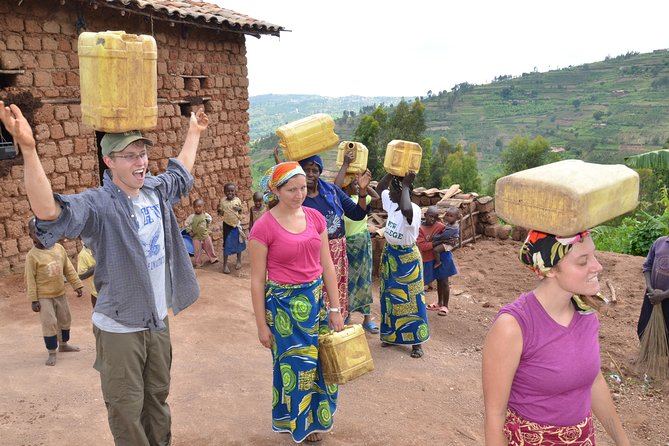
At $90 per person, this is not the cheapest way to spend a day near Kigali. It is also more than a basic transfer and village walk. The price includes a local guide, tour host, lunch, bottled water, gratuities, and return transport between Muhanga Town and the village.
That package gives the price reasonable value if you want a guided, hands-on experience without arranging each part yourself. You are paying for a full day, a small group limited to six, instruction from local artisans, food, and transport within the village portion of the outing.
The main extra cost is getting from Kigali to Gitarama. Ask for a quote before booking and compare it with the cost of arranging your own transport. Group discounts are available, which may make the experience more attractive for families, school groups, and friends traveling together.
The gift shop is also extra. Set aside money if you want a basket, piece of jewelry, or another handmade item. Buying directly from the cooperative can be a meaningful way to support the artisans, but purchase only what you genuinely want. You do not need to buy anything to take part.
Who will enjoy this most
I would recommend this experience to anyone who wants a first introduction to rural Rwanda and prefers doing over watching. It suits families with children who can manage a full active day, students, couples, and small groups looking for personal contact.
It is especially good for first-time visitors because the activities give you an immediate way into local life. You do not need prior knowledge of Rwandan agriculture or weaving. The guide and hosts show you what to do.
It may be less suitable if you want a relaxed sightseeing day with little walking or physical effort. Uneven ground, farming, water collection, and outdoor work are part of the plan. Children must be accompanied by an adult, and the child rate applies only when sharing with two paying adults.
The experience is listed as allowing service animals and being near public transportation. Still, uneven surfaces may create practical limits for some visitors. Ask Azizi Life about your specific mobility needs before booking rather than relying on the general accessibility note.
Practical advice for a smoother day
Wear clothes you can work in and shoes suited to uneven ground. Bring patience, curiosity, and a willingness to let the schedule breathe.
Carry a little extra money for handicrafts, but remember that purchases are optional. Bottled water is included, although you may still want any personal essentials you normally carry during an eight-hour outing.
Confirm these points before you pay:
- The exact meeting time at NR1 in Gitarama
- The added charge and arrangements for transport from Kigali
- The expected return time to the meeting point
- Any food allergies or dietary needs
- Whether your preferred craft is sisal weaving or another artisan activity
Free cancellation is available if you cancel at least 24 hours before the start time. Changes or cancellations made later are not accepted for a refund, and the cut-off follows local time.
Should you book A Day in the Life of a Local Artisan?
Book it if you want a personal, active day with Rwandan hosts and you value conversation as much as sightseeing. The best parts are the small group, the shared vegetarian meal, the chance to help with real household tasks, and the patient two-hour weaving lesson.
Think twice if transport from Kigali makes the total cost too high, or if uneven ground and farm work are not a good fit. For most visitors who want more than a quick city tour, the $90 base price is fair for the time, food, guide, and craft instruction included. Just sort out the Kigali transfer before booking, and arrive ready to work a little, listen closely, and laugh at your first attempt with a hoe.
FAQ
Where does the experience start?
The listed meeting point is NR1 in Gitarama, Rwanda, also known as Muhanga Town.
Is transportation from Kigali included?
No. Transportation from Kigali is not included in the listed price, but it can be arranged on request for an additional charge.
What transportation is included?
Return transport from Muhanga Town to the village is included, and the activity ends back at the meeting point.
How long does the experience last?
The experience lasts approximately eight hours.
What food is served for lunch?
Lunch is local Rwandan food prepared as vegetarian fare. Cassava and beans are given as examples of what may be served.
What craft will I learn?
The stated lesson is approximately two hours of one-to-one instruction in weaving a simple item from sisal.
Can I buy handicrafts?
Yes. Local handicrafts made by the artisan family or cooperative may be available for purchase, but gift-shop items are not included in the tour price.
How many people can join?
The experience is limited to six people and is listed as a private activity for your group. A minimum of two people is required per booking.
Is cancellation free?
You can receive a full refund by cancelling at least 24 hours before the experience start time. Cancellations or changes made less than 24 hours in advance are not accepted for a refund.
Just added in Kigali
- Traditional Drumming and Dancing Class★ 5.0 · 2 reviews
- Gorilla Trekking Adventure – A Day trip (Only transfer)★ 5.0 · 2 reviews
- Rwanda One Day Gorilla Trekking with Iby’iwacu Culture Visit★ 5.0 · 2 reviews
- One Day Mt Bisoke Hike Adventure in Volcanoes Park ( 2 Pax Min)★ 5.0 · 1 review
- From Kigali: 8 Hour Day-trip Lake Kivu Cruise Experience★ 4.5 · 3 reviews
- Bar Hopping Tour in Kigali Nightclubs★ 4.0 · 3 reviews
- Most Innovative Full-Day Kigali Yacu Experience★ 5.0 · 2 reviews
- Imigongo (cow dung art) Experience★ 5.0 · 1 review
Traditional Culture Experiences, compared.
Mount Kigali and Cultural Village Tour with Snacks
Read our review →

Guided Art, History, and Food Tour with Moto Ride
Read our review →
Kigali City Tour: History, Art and Local Highlights.
Read our review →

One Day Gorilla Trekking Rwanda & Iby’iwacu Cultural Village
Read our review →Browse the lists this tour appears in