

Reviewed · TRADITIONAL CULTURE EXPERIENCES
Explore Talking Through Art and its neighborhood in Rwanda
See Kigali through local streets. The Talking Through Art walking tour offers a personal look at Gikondo through its art center, neighborhood roads, market life, and everyday routines. I like the chance to meet local weavers and enjoy coffee or tea at the gallery, and I like the simple food stops, especially the freshly cooked sambusa and chilled ikivuguto. The main consideration is that this is a walking experience through a working neighborhood, not a polished sightseeing route.
I also appreciate the small private format. Your group joins only your guide, which should make it easier to ask questions and pause when something catches your attention. At about two hours and $20 per person, it offers good value if you want local contact and cultural context rather than a long list of major landmarks.
In This Review
- Key points to know before you go
- Starting with art at Talking Through Art
- Walking into everyday Gikondo
- Exploring the traditional street market
- Sambusa, coffee, tea, and ikivuguto
- Why the private format matters
- What the $20 price really buys
- Who will enjoy this Kigali walk most
- Practical advice for a smoother visit
- Should you book Talking Through Art?
- FAQ
- Where does the Talking Through Art walking tour begin?
- Where does the tour end?
- How long does the experience last?
- What is included in the tour?
- Is bottled water included?
- Is this a private tour?
- Can I cancel for a full refund?
Key points to know before you go
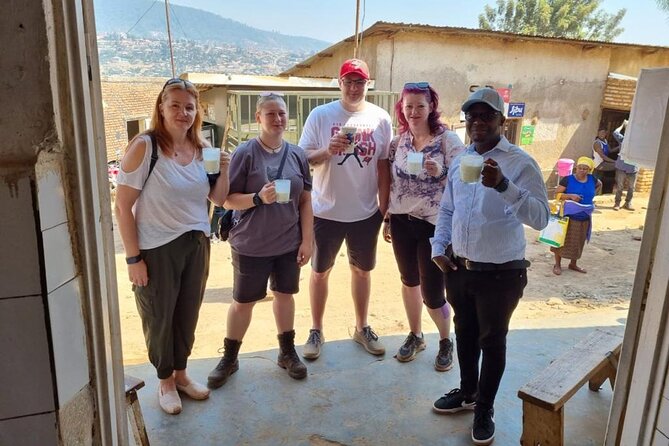
- Start at Talking Through Art: The tour begins with the center’s story, its gallery, and its work with local artists.
- Meet the weavers: You have time to speak with the people making woven pieces, one of the most praised parts of the experience.
- Walk through Gikondo: The route shows roads, homes, shops, and community life away from Kigali’s major sights.
- Taste everyday Rwanda: A freshly cooked sambusa and chilled ikivuguto are included in the experience.
- Private two-hour outing: Only your group takes part, and the walk returns to the starting point.
- Bring your own water: Snacks are included, but bottled water is not.
Starting with art at Talking Through Art
Your visit begins at Talking Through Art on TTAKK 722 Street in Kigali. This is more than a place to collect a ticket and rush outside. The opening introduction explains the center’s history and the work carried out there, giving the rest of the walk a clear purpose.
I like this beginning because it puts art first. Instead of treating Gikondo as a backdrop, the experience starts with local creativity and the people connected to it. You get a chance to look around the gallery while having local coffee or tea, a relaxed way to settle in before walking through the neighborhood.
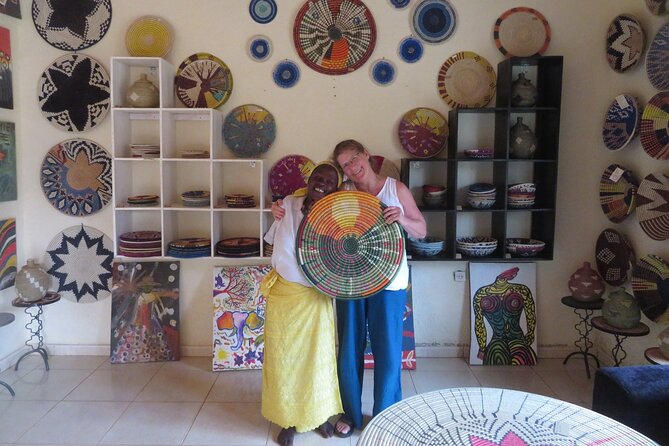
The gallery visit also helps you understand the center as a community space. The tour is not only about viewing finished pieces behind glass. You have time to meet and interact with weavers, which gives the visit a human focus.
The strongest praise for this experience centers on the weaving. That makes sense. Seeing a woven item is one thing. Talking with the people who make it gives you a better feel for the skill, patience, and daily work behind it. If you are interested in handmade goods, local design, or buying meaningful souvenirs, allow yourself time here instead of treating the gallery as a quick stop.
The available information does not promise a particular collection, artist, or type of weaving on every visit. I would keep your expectations open and focus on the meeting itself. The experience is personal rather than a formal museum tour.
More cultural experiences in Kigali:
- Kigali: Mount Kigali and Cultural Village Tour with Snacks
★ 4.8 · 62 reviews - Kigali: Traditional Coffee Experience ( Bean to Brew)
★ 4.8 · 54 reviews - Kigali: Traditional Basket Weaving in a Garden
★ 4.8 · 41 reviews
Walking into everyday Gikondo
After the introduction, the tour moves out into Gikondo. The appeal is simple: you walk the roads where local people live and work, rather than seeing Kigali only from a vehicle or through its best-known attractions.
That change of pace matters. A car can show you a lot of Kigali in a short time, but a walk lets you notice the shape of daily life. You can take in the neighborhood at street level, with your guide explaining what you are seeing and how the community works.
The guide has lived and worked in Gikondo all his life. That is a major strength. You are not getting a general speech about Rwanda delivered from a distance. You are walking with someone whose own life is tied to the area.
I would use the walk to ask direct questions. Ask about the streets, local routines, the role of markets, and how the art center fits into the community. The private format should help here. You do not have to wait for a large group to finish taking photos or listen to a fixed script from the back of a crowd.
The walk is also the part that requires the most flexibility. This is a real neighborhood, not a stage set prepared for sightseeing. Roads may be active, surfaces may vary, and the route is designed around local life rather than grand views. Wear comfortable shoes and keep your attention on where you are walking.
Because the tour lasts about two hours, the route can offer a useful taste of Gikondo without taking over your day. You will not see every part of the area, and this is not meant to replace a full Kigali city tour. It works best as a focused local encounter.
Exploring the traditional street market
One of the most appealing stops is a traditional neighborhood street market. Here you can look at fresh local produce and watch the ordinary rhythm of buying and selling.
Markets are valuable because they connect several parts of a place at once. Food, work, conversation, household needs, and local habits all meet in one setting. A market visit can tell you more about daily life than a display of historic objects, especially when your guide can explain what you are looking at.
This is also where the tour’s walking format earns its $20 price. You are not simply being shown a market and sent on your way. The guide can help you read the scene, point out produce, and provide context for the neighborhood around it.
Keep your expectations realistic. The information does not promise a large commercial market, a shopping session, or a long period for independent browsing. It is one part of a compact walk. The point is the atmosphere and local setting, not a major retail excursion.
I would bring small curiosity rather than a shopping list. Look closely, ask questions, and let the guide set the pace. If you want to photograph people or stalls, ask first. That small courtesy is especially important in a working market.
Sambusa, coffee, tea, and ikivuguto
Food gives the tour a welcome sensory break. A freshly cooked sambusa is included, adding a hot, simple snack during the walk. Since the experience is only about two hours, this is not a full meal, but it is enough to make the route feel more connected to local routines.
At Talking Through Art, you can enjoy local coffee or tea. Later, the group stops at a nearby milk shop where you can try chilled ikivuguto, a traditional Rwandan beverage.
The ikivuguto stop is one of the most distinctive details of the outing. It is not the kind of tasting you typically get from a standard city sightseeing route. The drink gives you a small but direct link to Rwandan food culture, while the milk shop places that taste in an everyday setting.
The food and drink are included in the experience, but bottled water is not. Bring your own water, particularly if you are walking in warm weather. You may also want to mention any food or drink concerns before setting out, since the supplied information does not give details about substitutions or dietary options.
I like the balance here. You get something to eat, something to drink, and a chance to pause, but the focus remains on the neighborhood and the people you meet. This is not a restaurant tour with a long menu. It is a small taste of Gikondo folded into a local walk.
A completely different kind of day:
- Kigali City Tour
★ 5.0 · 452 reviews - Kigali: Walking Tour with a Local Guide
★ 4.9 · 234 reviews - One-day Akagera National Park Game Drive with a Choice 4×4
★ 5.0 · 105 reviews - Private Full-day Kigali City Tour with Pickup and Lunch
★ 5.0 · 79 reviews
Why the private format matters
This is a private activity, so only your group participates. That changes the feel of the tour in useful ways.
You can ask more questions without holding up a large group. You can also pay closer attention to the guide’s explanations, especially during the gallery visit and market stop. If your group has a particular interest in weaving, food, or local community life, you can steer the conversation in that direction.
A private tour does not guarantee that every request can be added to the route. The published experience has a set focus: Talking Through Art, the gallery, the weavers, Gikondo, the market, sambusa, and ikivuguto. Still, the format gives you a better chance to have a genuine exchange.
I would recommend this setup for solo visitors, couples, families, and small groups who prefer conversation over a fixed group performance. It may be less suitable if you want a fast-moving list of landmark stops or a formal lecture on Rwanda’s national history.
What the $20 price really buys
At $20 per person, the price is modest for a private two-hour outing in Kigali. The value does not come from the number of attractions. It comes from access, local guidance, the gallery welcome, contact with weavers, neighborhood interpretation, and included snacks.
You are paying for a focused experience rather than transportation between distant sights. The meeting point and finish point are both at Talking Through Art, so the price does not include a private vehicle or a transfer service. That keeps the cost down, but you need to arrange your own way to TTAKK 722 Street.
The included coffee or tea, sambusa, and ikivuguto add practical value. You should still carry bottled water, since it is not supplied. If you compare this with a larger city tour, you may see fewer sights. If you compare it with a private local guide and several small tastings, the cost looks fair.
The experience also supports a community-focused art center and gives you direct contact with local makers. That does not mean every visitor will place the same value on it. If your main goal is Kigali’s headline attractions, your money may be better used on a wider city tour. If your goal is understanding one neighborhood at street level, this is a sensible spend.
Who will enjoy this Kigali walk most
I would choose this tour if you want to see a side of Kigali that is tied to ordinary community life. It suits you particularly well if you enjoy meeting artists, asking questions, visiting markets, and trying small local foods.
It is also a good choice for someone who wants a gentle introduction to Rwandan culture. The gallery offers a clear starting point, while the market and food stops move the experience into daily life. You get several forms of contact without committing to a full-day program.
Families may appreciate the short duration and variety, although the supplied details do not describe a special children’s program. Most people can participate, and service animals are allowed. The activity is also near public transportation, which may help when planning your arrival.
I would think twice if you dislike walking through active neighborhoods or prefer polished attractions. The tour’s value depends on your interest in the setting itself. Gikondo is not being presented as a row of famous monuments. You are there to notice people, work, food, and place.
Practical advice for a smoother visit
Plan to arrive at Talking Through Art, TTAKK 722 St, Kigali, Rwanda. The activity ends back at the same meeting point, which makes it easier to continue with your day afterward.
Wear shoes you can comfortably walk in for two hours. Bring bottled water, since it is not included, and keep your belongings secure as you would in any busy public area. A small bag is easier than a large one during the market portion.
Keep some flexibility in your schedule. The tour is listed at approximately two hours, and the pace may depend on conversation, the gallery visit, and activity in the neighborhood. That is part of the appeal, but it means you should avoid scheduling a tight appointment immediately afterward.
Confirmation is provided at booking. Free cancellation is available if you cancel at least 24 hours before the local start time. Changes or cancellations made less than 24 hours before the start are not accepted for a refund.
The experience has a perfect rating from the single published assessment, with special praise for the beautiful weaving and the chance to walk through local roads. That is encouraging, but it is still a very small record. I would treat the praise as a useful clue about the tour’s strengths, not as proof that every visit will be identical.
Should you book Talking Through Art?
Book it if you want a personal, low-cost look at Gikondo, with art, weaving, a local market, and small tastes of Rwandan food and drink. The strongest reasons to go are the private format, the guide’s lifelong connection to the area, and the chance to meet weavers rather than simply view their work.
Skip it if you want major Kigali landmarks, private transportation, or a full meal. You will need to reach the meeting point yourself and bring water. For the right kind of visitor, though, this two-hour walk offers something more useful than another pass by the city: a direct look at how one Kigali neighborhood works.
FAQ
Where does the Talking Through Art walking tour begin?
The tour begins at Talking Through Art, located at TTAKK 722 St, Kigali, Rwanda.
Where does the tour end?
The activity ends back at the Talking Through Art meeting point.
How long does the experience last?
The walking tour lasts approximately two hours.
What is included in the tour?
Snacks are included. The experience also includes local coffee or tea at Talking Through Art, a freshly cooked sambusa, and the chance to try chilled ikivuguto.
Is bottled water included?
No. Bottled water is not included, so you should bring your own.
Is this a private tour?
Yes. Only your group participates in the activity.
Can I cancel for a full refund?
Yes, if you cancel at least 24 hours before the experience start time. Cancellations or changes made less than 24 hours before the start are not accepted for a refund.
Just added in Kigali
- Gorilla Trekking Adventure – A Day trip (Only transfer)★ 5.0 · 2 reviews
- Rwanda One Day Gorilla Trekking with Iby’iwacu Culture Visit★ 5.0 · 2 reviews
- Traditional Drumming and Dancing Class★ 5.0 · 2 reviews
- One Day Mt Bisoke Hike Adventure in Volcanoes Park ( 2 Pax Min)★ 5.0 · 1 review
- From Kigali: 8 Hour Day-trip Lake Kivu Cruise Experience★ 4.5 · 3 reviews
- Most Innovative Full-Day Kigali Yacu Experience★ 5.0 · 2 reviews
- Bar Hopping Tour in Kigali Nightclubs★ 4.0 · 3 reviews
- Imigongo (cow dung art) Experience★ 5.0 · 1 review
Traditional Culture Experiences, compared.

Mount Kigali and Cultural Village Tour with Snacks
Read our review →

Guided Art, History, and Food Tour with Moto Ride
Read our review →
Kigali City Tour: History, Art and Local Highlights.
Read our review →

Browse the lists this tour appears in