

Reviewed · WALKING TOURS
Kigali Walking Tour
Kigali reveals itself one neighborhood at a time. I like this tour because it links art, memory, markets, and daily life instead of treating the capital as a string of photo stops. I also like the chance to walk with a local guide, meet residents, and get practical ideas for the rest of your stay. The main drawback is that some travelers may find the route light on major landmarks and formal storytelling.
At about two and a half hours, this is a useful first look at Kigali rather than a full city tour. Guides such as Gloria and Shark have earned praise for their warmth, enthusiasm, and easy conversation. Still, the experience can vary by guide, group, and city events, so I would book it for local perspective more than for a tightly scripted history lesson.
In This Review
- Key points to know before booking
- What this Kigali walk is really designed to do
- Starting at Kigali Heights
- Ivuka Arts: a creative first stop
- The Belgian Peacekeepers Memorial and a difficult chapter
- Nyamirambo Women’s Center and community work
- Biryogo, food, and a car-free street
- Kigali City Market: the most practical stop
- The guide can make or break the walk
- Is $30 a fair price?
- Who should book this Kigali walking tour?
- FAQ
- How long is the Kigali Walking Tour?
- How much does the tour cost?
- Where does the tour start?
- What time does the tour start?
- Where does the tour end?
- Is bottled water included?
- What is the cancellation policy?
- Should you book it?
Key points to know before booking
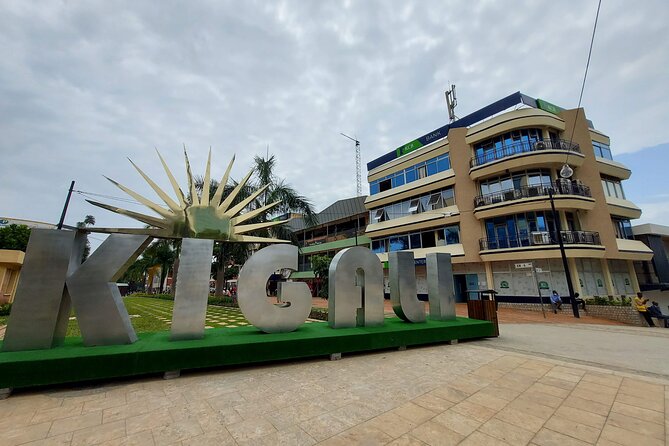
- Five very different stops take you from an art center and memorial to a women’s nonprofit, a car-free food street, and a working market.
- Gloria and Shark are names praised for friendly guidance, strong conversation, and enthusiasm for Kigali.
- The Belgian Peacekeepers Memorial gives the walk a serious historical center, though the tour may not satisfy you if you want a long history lecture.
- Biryogo and Kigali City Market offer a closer look at ordinary city life, with food, drinks, fruit, tea, coffee, honey, and household goods.
- Morning or afternoon scheduling makes the tour easy to fit into a Kigali visit, with a stated start time of 10:00 a.m.
- The $30 price is fair if you value a local introduction and personal tips, but less compelling if you want entry tickets or a landmark-heavy route.
What this Kigali walk is really designed to do
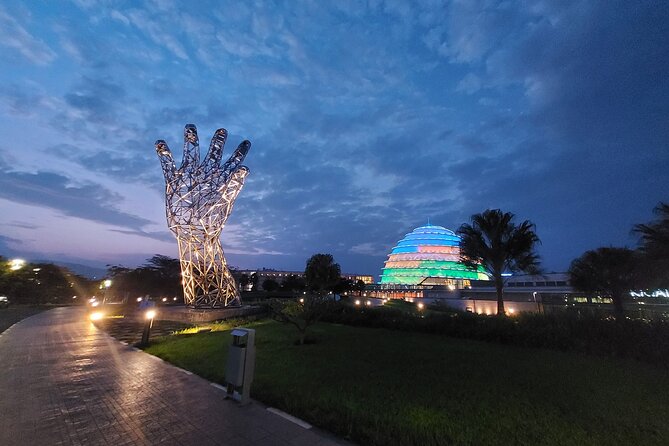
This experience is best understood as a city orientation on foot. It does not concentrate on one famous monument or museum. Instead, it moves through several parts of Kigali and gives you a sense of how art, remembrance, community work, food, commerce, and neighborhood life fit together.
That approach has real value in Kigali. The city’s attractions are spread across different areas, so a walk like this can help you understand the relationship between places that might otherwise feel disconnected. You see an art center, a memorial, Nyamirambo, Biryogo, and the City Market in one outing.
The stated duration is about 2 hours and 30 minutes. That is long enough to gather useful impressions without consuming your whole day. I would schedule it near the beginning of your stay, since the guide is meant to offer ideas and practical pointers for later.
The experience costs $30 per person and includes bottled water. Coffee and tea cost extra. With a maximum of 50 people, the group could be small and personal, but the published capacity is large enough that you should not assume an intimate walk. The strongest experiences appear to come when the group is smaller and the guide has time for conversation.
More walking tours in Kigali:
- Kigali: Walking Tour with a Local Guide
★ 4.9 · 234 reviews - Rwanda Half-Day Walking Food Tour
★ 5.0 · 35 reviews - 1 Day Canopy Walk Adventure in Nyungwe Forest National Park
★ 5.0 · 32 reviews
Starting at Kigali Heights
The walk begins at Kigali Heights on KG 7 Avenue. This is a practical meeting point near public transportation, and the stated start time is 10:00 a.m. The experience information also allows morning or afternoon departures, so check the exact option you select when booking.
You finish downtown at the listed location on 3345+V23. That point-to-point format is useful because you do not simply return to where you started. You can continue exploring downtown after the walk, though the exact end point should be checked on your mobile ticket.
A mobile ticket keeps the arrival process simple. Confirmation is supplied at booking, and bottled water is included. You will want to budget separately for coffee or tea if you plan to stop for one.
Ivuka Arts: a creative first stop
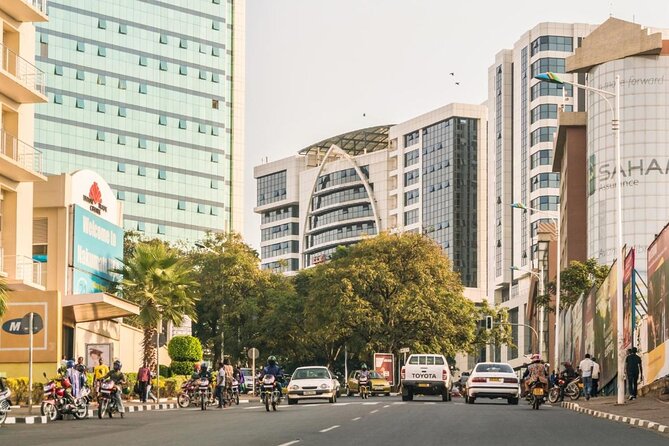
The first stop is Ivuka Arts Kigali, an arts center and gallery. You have about 20 minutes here, with no admission charge listed.
This is a smart opening stop because it introduces Kigali through its contemporary creative work rather than beginning with a dry list of dates. The setting gives your guide a chance to talk about local artists and the city’s cultural side, while you get a few early photo opportunities.
Twenty minutes is enough for a quick look, not a full gallery visit. If you enjoy art and want long conversations with artists, you may find the time short. For a first orientation, though, the stop adds character and prevents the walk from becoming only a tour of roads and buildings.
The art center also helps set expectations. This tour is not limited to famous sights. It is built around places that help you read the city through its people and institutions.
The Belgian Peacekeepers Memorial and a difficult chapter
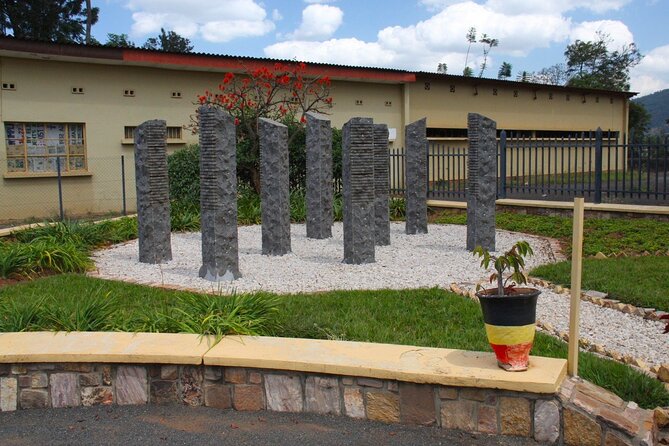
The walk then turns to the Belgian Peacekeepers Memorial, where about 30 minutes are allotted. The site marks the killing of ten Belgian United Nations peacekeepers by Hutu extremists, an event intended to provoke the withdrawal of UN forces and clear the way for the full-scale genocide that followed.
This is the most serious stop on the route. It gives the tour a direct connection to Rwanda’s recent past and helps explain why remembrance is so important in Kigali. You should expect a reflective visit rather than a light sightseeing break.
The amount of detail you receive may depend heavily on the guide. Some people want a clear, well-structured account of the events and the wider history of Rwanda. Others value a shorter explanation followed by time to think. If you are choosing this experience mainly for historical education, ask yourself how much storytelling you need. The tour includes the memorial, but it is not presented as a dedicated genocide history program.
That distinction matters. The memorial gives the route emotional weight, yet the overall walk quickly moves on to art, neighborhoods, food, and markets. I see that as a strength for a broad city introduction, but a limitation if history is your main reason for booking.
A completely different kind of day:
- Kigali City Tour
★ 5.0 · 452 reviews - One-day Akagera National Park Game Drive with a Choice 4×4
★ 5.0 · 105 reviews - Private Full-day Kigali City Tour with Pickup and Lunch
★ 5.0 · 79 reviews - Kigali E-Bike City Tour with Breakfast
★ 4.9 · 73 reviews
Nyamirambo Women’s Center and community work
The next stop is Nyamirambo Women’s Center, with around 30 minutes there. The center was founded at the end of 2007 by 18 Rwandan women living in Nyamirambo. Its work addresses gender-based violence, gender inequality, and discrimination through education and vocational training for women who cannot afford such training on their own.
This stop adds a social and human dimension to the walk. You are not just passing through a neighborhood and taking pictures. You are learning about a local organization built by women in the community and focused on practical paths to employment.
The center can also help you understand Nyamirambo beyond its reputation as a lively area of Kigali. The tour connects a real local initiative with the larger questions of opportunity and equality in Rwanda.
Again, the 30-minute timing suggests an introduction rather than an extensive visit. You should not expect a full workshop or a long program unless the exact tour arrangement says otherwise. Its value is in the context your guide supplies and in seeing how a community organization operates as part of city life.
Biryogo, food, and a car-free street

Biryogo is described as a colorful car-free zone and a central point of the city, known for varied cultures and foods. The tour allows about 30 minutes here.
This is one of the stops most likely to make the city feel immediate. A car-free street gives you space to walk at an easy pace and notice food, storefronts, people, and the general rhythm of the neighborhood. It is less formal than a museum and more useful for understanding how Kigali works from street level.
I like this part because it balances the memorial and the gallery with something social and everyday. Your guide can point out places to eat and share suggestions for the rest of your time in Kigali.
The trade-off is that Biryogo is not a single attraction with a fixed display. Its appeal depends on what is happening during your visit and how well the guide brings the area to life. A city walk works best here when you are curious and willing to look around, not when you expect a major monument at every turn.
Kigali City Market: the most practical stop
The final listed stop is Kigali City Market, where you spend about 30 minutes. It is a working market rather than a tourist display, with food, household items, and vendors across different levels. The upper floors have a more mall-like feel, while the ground floor has a mix of sellers.
This is a good place to see ordinary commerce. You may find fruit, tea, coffee, honey, and other goods, along with places to eat and drink. Prices are described as reasonable, with little need for hard bargaining and less pressure to buy than in some tourist markets.
Photography is generally easy, and the sellers are described as engaging without excessive hassle. That makes the market a comfortable stop if you want to look around without feeling pushed into a purchase.
You do not need to expect souvenirs or polished tourist products here. The point is the market itself, not a shopping performance. If you want local food products or simply enjoy seeing how a city shops, this stop may be one of the most useful parts of the tour.
Since the market is safe, well lit, and has strong security, some people may feel comfortable visiting independently. The guide’s value here is less about protection and more about adding context, pointing out useful products, and helping connect the market to the rest of Kigali.
The guide can make or break the walk
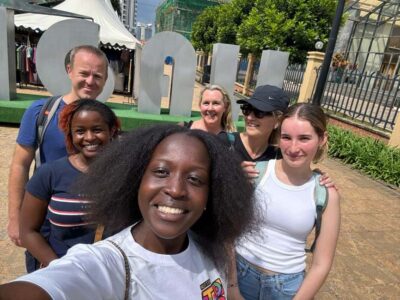
The most praised part of this experience is the human element. Gloria is singled out for intelligence, warmth, and the ability to hold good conversations. Shark is praised for enthusiasm, a friendly manner, and making a small group feel personal. Another positive account mentions a pleasant group, good organization, and motorcycle rides.
Those details tell you what to look for. This tour seems strongest when you want to ask questions, talk about Rwanda, and hear a local view of Kigali. It is not simply a route between stops. Your enjoyment may depend on how much the guide explains, responds, and adjusts the pace.
There is also a clear warning. Some participants found the storytelling too thin and felt they received little information about the city or its history. One person described the route as unusual because the Tour de Rwanda was taking place and affected movement and the planned route.
That is a useful reminder that city walks are exposed to outside events. A cycling race, road closure, or changed neighborhood conditions can alter the schedule. The operator has acknowledged the need to improve historical explanations and pacing, so I would treat guide quality and route flexibility as real factors in the decision.
The overall rating is 4.6 from 78 ratings, with 90 percent recommending the experience. That points to a generally positive outing, but the spread of opinions means you should book with the right expectations. Choose it for local contact and a broad introduction, not as a guaranteed master class in Rwandan history.
Is $30 a fair price?
At $30, I consider the price reasonable if you are new to Kigali and want several areas connected in one outing. You get a local guide, bottled water, and a route that includes art, remembrance, community work, a food district, and a market. Those are five different windows into the city.
The value drops if you are mainly paying for entrance fees, since admission is listed as free at the stops. It also drops if you prefer independent exploration and already know where you want to go. Kigali City Market, in particular, can be visited without a guide according to the practical details provided.
The best reason to pay is the human guidance. A strong guide can save you time, explain what you are seeing, and give you ideas for the rest of your stay. A weaker guide may leave you feeling that you walked between places without enough context.
There is no need to plan your day around a long excursion. At roughly two and a half hours, the tour leaves room for lunch, museums, or more time downtown. The morning or afternoon choice is also useful, though the stated departure information specifically gives 10:00 a.m. as a start time.
Who should book this Kigali walking tour?
I would recommend it to a first-time visitor who wants a quick city survey and enjoys walking through ordinary neighborhoods. It is also a good fit if you want to meet a local guide, ask questions, find photo spots, and get suggestions for the rest of your visit.
It suits curious people more than checklist tourists. The route includes meaningful places, but it does not promise a long list of famous landmarks. You should be comfortable with a tour whose appeal comes from contrasts: gallery and memorial, nonprofit and food street, market and downtown.
I would be more cautious if you want a detailed account of Rwanda’s history. The Peacekeepers Memorial is important, but the tour gives equal weight to culture, commerce, and daily life. For a dedicated history experience, you may want something more focused.
The maximum group size of 50 is another consideration. A group may be smaller, and some praised the personal feel of a small outing, but the published limit means you should not count on a private atmosphere. If a compact group matters greatly to you, confirm the expected size before booking.
Free cancellation is available if you cancel at least 24 hours before the start time. Changes or cancellations made inside that window are not accepted for a refund, and the cut-off follows Kigali local time.
FAQ
How long is the Kigali Walking Tour?
The tour lasts approximately 2 hours and 30 minutes.
How much does the tour cost?
The listed price is $30 per person.
Where does the tour start?
The meeting point is Kigali Heights, KG 7 Avenue, Kigali, Rwanda.
What time does the tour start?
The stated start time is 10:00 a.m. The experience also offers morning or afternoon departure options, so check the exact selection at booking.
Where does the tour end?
The walk ends downtown at the listed location 3345+V23, Kigali, Rwanda.
Is bottled water included?
Yes. Bottled water is included, while coffee and tea are not included.
What is the cancellation policy?
You can cancel at least 24 hours before the start time for a full refund. Cancellations or changes made less than 24 hours before the experience are not accepted for a refund.
Should you book it?
Book this walk if you want a friendly introduction to Kigali through real places, not a parade of major monuments. Ivuka Arts, the Belgian Peacekeepers Memorial, Nyamirambo Women’s Center, Biryogo, and Kigali City Market create a varied route, and guides such as Gloria and Shark can add the conversation that brings it together.
Skip it if you already know Kigali, dislike walking between scattered city areas, or need detailed historical narration at every stop. At $30, the experience is worthwhile when the local insight is your priority. Go in expecting an orientation, stay open to neighborhood life, and you are more likely to find the walk useful.
Just added in Kigali
- Gorilla Trekking Adventure – A Day trip (Only transfer)★ 5.0 · 2 reviews
- Rwanda One Day Gorilla Trekking with Iby’iwacu Culture Visit★ 5.0 · 2 reviews
- Traditional Drumming and Dancing Class★ 5.0 · 2 reviews
- One Day Mt Bisoke Hike Adventure in Volcanoes Park ( 2 Pax Min)★ 5.0 · 1 review
- From Kigali: 8 Hour Day-trip Lake Kivu Cruise Experience★ 4.5 · 3 reviews
- Bar Hopping Tour in Kigali Nightclubs★ 4.0 · 3 reviews
- Most Innovative Full-Day Kigali Yacu Experience★ 5.0 · 2 reviews
- Imigongo (cow dung art) Experience★ 5.0 · 1 review
Walking Tours, compared.


1 Day Canopy Walk Adventure in Nyungwe Forest National Park
Read our review →

Local Community Tour(Cultural, Coffee,Village walk,Local food)
Read our review →
1 Day Nyungwe Canopy Walk & Waterfall Tour adventure
Read our review →
Browse the lists this tour appears in